
Creature Feature
The Ragged Mountain Azure
Nov
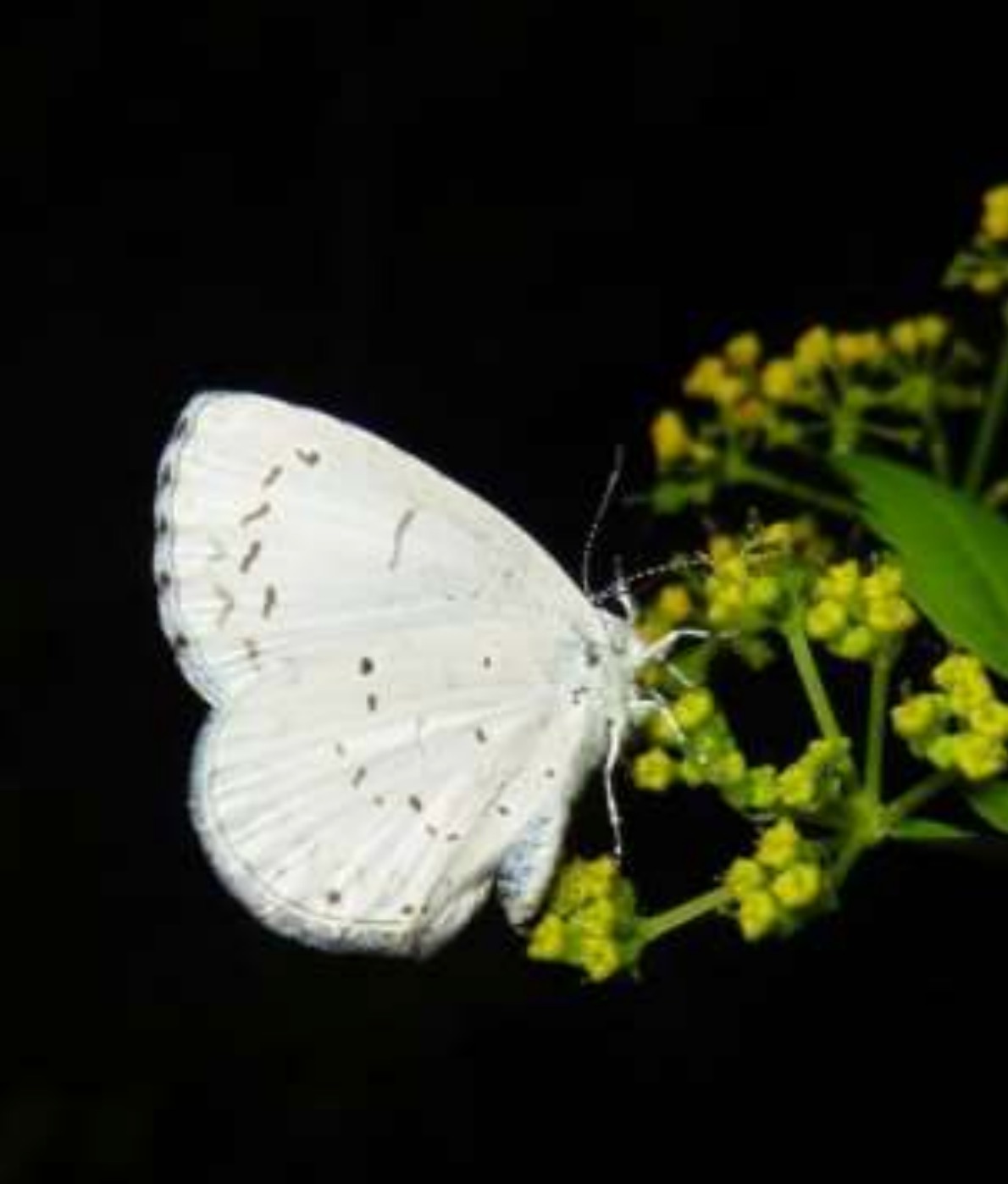
Above: The Appalachian Azure was first observed in the Ragged Mountains in early May, 2017. This image was taken on that day, and the butterfly is nectaring at hairy-jointed meadow parsnip, an important plant in the rich forested community that hosts this butterfly. Image by D. Floyd.
Appalachian Azure
Celastrina neglectamajor
Adapted from: Hedgerow Park Natural and Cultural Resource Inventory and Assessment – Report of Findings: 2017-2020
Late in the 19th century an unusually large and pale “Summer Azure” was being studied throughout the Appalachian range of the east, and evidence for a completely new species was beginning to emerge. Eventually studies would prove that this mountain species of azure was indeed distinctly different.
The Appalachian Azure (Celastrina neglectamajor) butterfly is a large spring-flying azure, and a denizen of the Appalachian Mountains. It is understood to be the evolutionary predecessor of the more modern Summer Azure (Celastrina neglecta), and while the summer azure is very widespread in all regions of Virginia, the Appalachian Azure is generally restricted to high elevation forests. Its range and habitat affiliation is deemed strictly “montane”, having evolved in the context of cooler climates with a preponderance of its montane host plant species, black cohosh (Actaea racemosa). The lower elevation areas of the Piedmont are generally inhospitable to this animal species. However, in modern times it has been documented in a few deep river valleys (Potomac River) and outlying montane forests (Bull Run Mountains) in Virginia and Maryland. Whether those constitute permanent populations is debatable. The Hedgerow Property has been added to the short list of places in the Virginia Piedmont where one may observe this species with predictability and regularity, year after year.
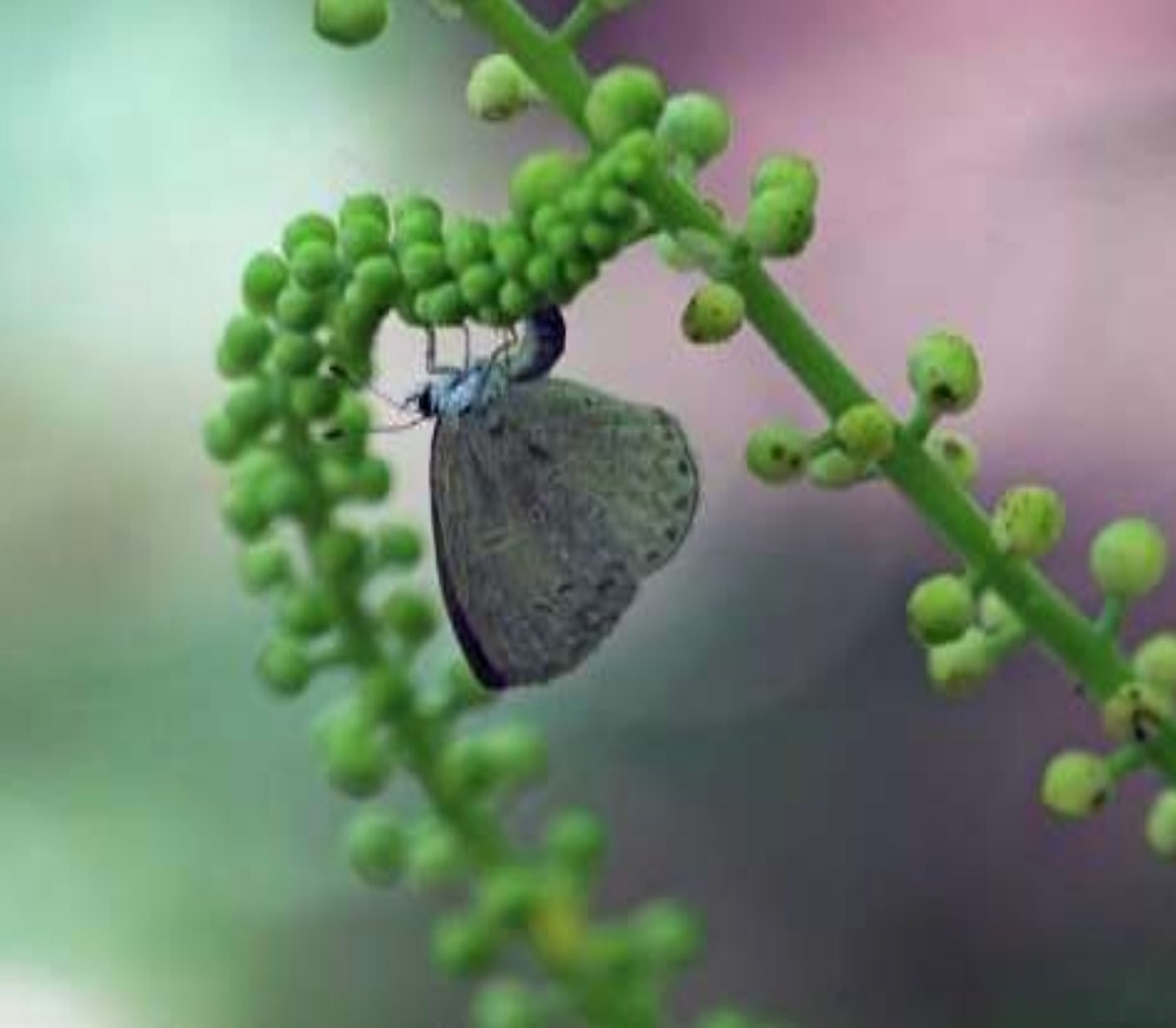
Perhaps the outlying Piedmont populations are remnants of cooler times. At the end of the last ice age its range would have included more of the Piedmont region between the low-lying Ragged Mountains and the high elevation Blue Ridge to the west. Much like many of the “disjunct” and “montane” plant species and communities described in this report (Appalachian Xeric Woodlands, for example), this species of butterfly represents a remnant of the deep past. It sustains in large part thanks to the cool microclimate conditions that remain in the deep rich ravines of the Ragged Mountains. Somehow it survived the wrath of agriculture and deforestation of the past 400 years, perhaps as small, mobile colonies that lingered and hopped from one steep slope and deep ravine to another. Or, perhaps the population represents a storm-blown group of insects that stuck because of favorable habitat and host plants. Regardless, this insect and the habitat is part of is worthy of further study and rigorous protection.
Naturally, we were quite excited to have a potential population of this species in the Ragged Mountains of Central Virginia. Not only is it a rare species for the region, its “disjunct” nature may prove to be important in supporting an isolated and unique variant of the species. Over the month following the discovery, and in the two years there-after, we made a successful attempt to better document the population with the hopes of increasing the accuracy of its identification.
During a preliminary walk-through for natural plant community assessments on May 3, 2017, the field crew noted an unusually large and pale azure butterfly nectaring on hairy-jointed meadow parsnip (Thaspium barbinode). A chase ensued in order to get a couple photographs. The size and color were very atypical of the more common Azure that is flying in mid-spring (spring azure), and upon reflection the insect reminded us of the complex history of Azure identification in the region. While the Appalachian Azure is common in the mountains to the west, permanent populations of this species are not known from the Piedmont of Virginia. If this is a locally abundant and sustainable population, separate from other populations to the west, it is a significant find and important conservation focal point.
The extremely early observation date, in combination with the host plant, nearly ruled out summer azure (C. neglecta)… a close look-alike. Plans were soon devised to revisit the location and document caterpillars (the only reliable way to tell them apart). The team returned in late May and photographed dozens of azure caterpillars on black cohosh. However, we remained unconvinced of the species identification, and the link between the butterfly we saw in early May and the caterpillars observed later the same month. Plans were devised to conduct an extensive survey the following year, timed to observe ovipositing adults and the very first emergent caterpillars that are so critical for identification.
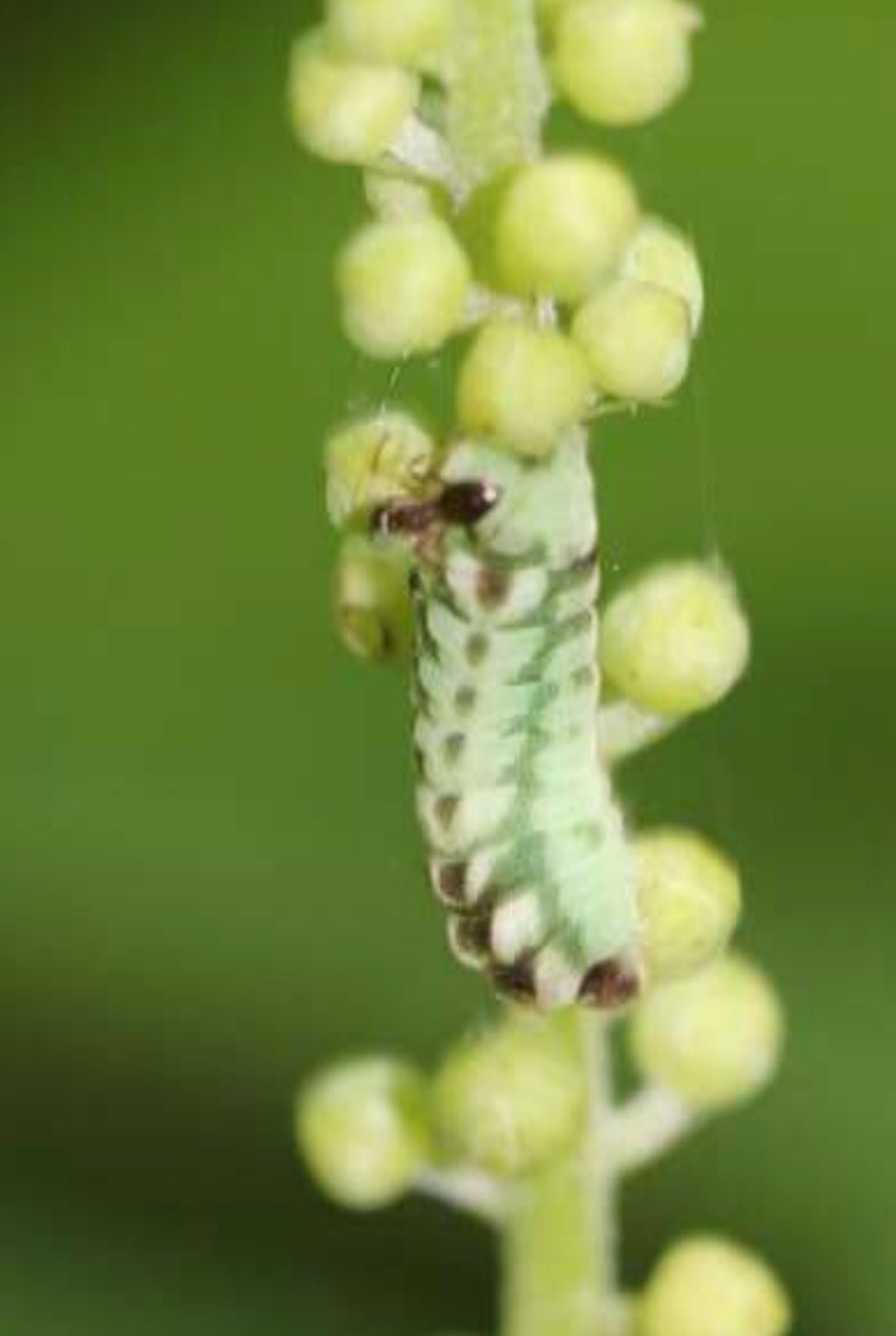
The Appalachian Azure (Celastrina neglectamajor) is very similar to the Spring and Summer Azures (C. ladon and C. neglecta) and differs in its adult form in that it is slightly larger and paler, and flies in between the other two in the season, with significant temporal overlap. The key for positive identification resides in the caterpillars, and in particular the freshly emerged ones. The larval host is black cohosh (Actaea racemosa). Because summer azure sometimes also lays its eggs on cohosh, a positive identification requires examining the coloration of the first instars (earliest stage of development) of the larvae. The caterpillars of both species may be found on the same plant at the same time, though at slightly different stages of development. The first instars of C. neglectamajor are yellow, and the setae along the top of the back are shorter and blunt tipped, while the first instar caterpillars of C. neglecta are green, and have very long and pointed setae along the back. This separation by coloration and setae can only be done during the first instar, as their morphologies converge as they get older.
After a couple years of study, a rigorous data collection expedition, and consultations with experts, we were able to conclude that a sustainable population exists in the Ragged Mountains. In fact, we have since seen the butterfly in other similar deep ravines in the Ragged Mountains. This macro-population likely represents one of the few known permanent population east of the Blue Ridge in Virginia (the forested ravines of the Bull Run Mountains in Northern Virginia may also be a permanent disjunct population).
The study that produced conclusive results took place in June of 2018. We performed a tedious data collection survey in the deep hollow where the initial discovery had been made, including an exhaustive inventory of black cohosh plants, azure eggs, caterpillars, and adult butterflies, as well as tending symbiotic ants. The survey effort involved four field technicians and 7 hours of data collection in a small two-ravine focal area defined by contiguous heavy vegetative cover of the host plant – black cohosh. During the survey period we observed a minimum of 5 adult female azures, and one likely male. The females were tracked until ovipositing (egg-laying) activity could be confirmed. They alighted for 5 minutes or more on nearby vegetation between ovipositing flights. No feeding/nectaring was observed on the survey day. They were busy with the single purpose of reproduction.
We absolutely nailed the larvae development timing. That gave us access to all four instars of the caterpillar, as well as ovipositing adults. The important detail was the color of the first instar, which are <1mm long, and their blunt dorsal setae (hairs). Their color was strongly aligned with documented cases of C. neglectamajor. Yellow is the key. After the first instar, the caterpillars are indistinguishable from the close relative, summer azure (C. neglecta). Supportive evidence was found in the size and color of the ovipositing butterflies, and the extensive and dense distribution of the colony. After data collection we conferred with Clyde Kessler (Virginia butterfly expert) and Harry Pavulaan (Azure butterfly expert) and concluded that the Hedgerow “Ragged Mtn. Azure” butterfly is indeed a self-sustained colony of Appalachian Azure (Celastrina neglectamajor).
What follows is an overview of our findings on the 7-hour data collection day on June 5, 2018.
left side is an indicator for Appalachian Azure.
Differentiation (Celastrina ladon, Celastrina neglecta, Celastrina neglectamajor):
- Host plant: At least 5 adult females were observed ovipositing on Actaea racemosa during
survey. The preferred local host plant of Celastrina neglecta is Ceanothus americanus and the
preferred host plant for Celastrina ladon is Cornus florida. C. neglecta has been observed
utilizing Actaea racemosa as a caterpillar food plant, however, the caterpillars do not survive
leaf consumption. Caterpillars were documented eating flower buds and leaves during our June
5, 2018 survey. Follow-up observations to see if mortality resulted did not occur. We had
confident identifying characteristics in the caterpillars (including setae length and first instar
color). - Flight Time: The early flight date observed in 2017 was May 3. This is a couple weeks earlier
than the earliest regional record for summer azure (Celastrina neglecta). So despite its possible
use of A. racemosa the flight date is early. The early May to early June flight window
documented in this population fits neatly between the Spring and Summer azure broods. This
tight time-window is referred to as allochronic timing. The tight ephemeral flower bud window
of the black cohosh plant has likely pushed the Celastrina further and further into a temporal
window of speciation and genetic differentiation from the other Celastrina. - Density: The numbers of caterpillars observed was high, and consistent throughout a large area
containing more than 180 individual plants with fully developed flower spikes. A quick jaunt to a neighboring hollow at the end of the day produced caterpillars on each of the Actaea plants observed. Further research at the property will determine the full extent of the population. For now one may presume the entire contiguous network of Basic Oak-Hickory and Basic Mesic Forest plant communities as a potential conservation area for this species. - First Instar Coloration: As noted by Harry Pavulaan’s Taxonomic Report dated December 15, 2000, the first instar may be the only consistent way to discern C. neglectamajor from C. neglecta in the field. We were able to document the color of several examples from each of four instars during survey. All first instar caterpillars observed were yellow in color, except for one that appeared to have been in the act of emerging from the egg. It was a very pale yellowish-green. As noted by Pavulaan, the first instars of C. neglecta are light green, not yellowish-green or yellow. Those two yellowish shades are exhibited only by C. neglectamajor in all research that exists to date.
General Description of Morphology and Behavior
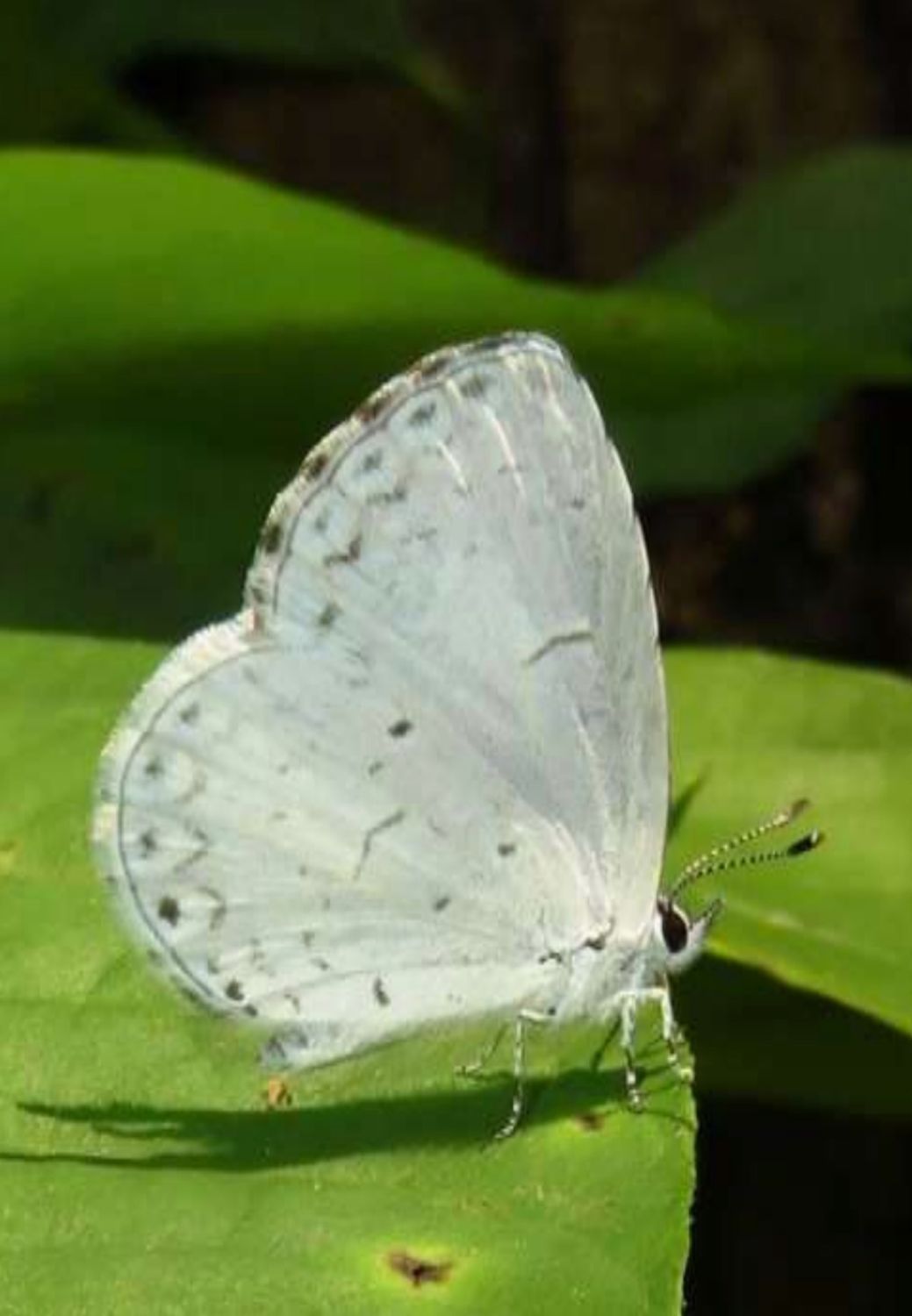
The initial discovery was made in early May of 2017, due to the sighting of an enormous azure. It was followed to its local phenological nectar preference (Thaspium barbinode) and several eggs were observed on Actaea racemosa flower stalks nearby. The butterfly was not caught in the act of ovipositing in 2017, despite there being eggs. Several adult butterfly individuals were observed ovipositing on Actaea racemosa at the same site on June 5, 2018 within the survey area. While it was not clear which species was being observed (C. neglecta vs. C. neglectamajor), each that presented itself was observed and followed when possible. In all cases, they were observed in association with the Actaea. No viable nectar sources were present in the hollow on the day of the survey, and it was clear that the butterflies were there for one purpose – ovipositing. Two were tracked between ovipositing efforts, and during rest they would alight upon a horizontal leaf, less than 15 feet off the ground, for 5-10 minutes, before returning to the cohosh for more egg-laying.
While the description is entirely qualitative and a bit subjective, these ovipositing azures were notably large and pale-patterned, and almost chalky white beneath.
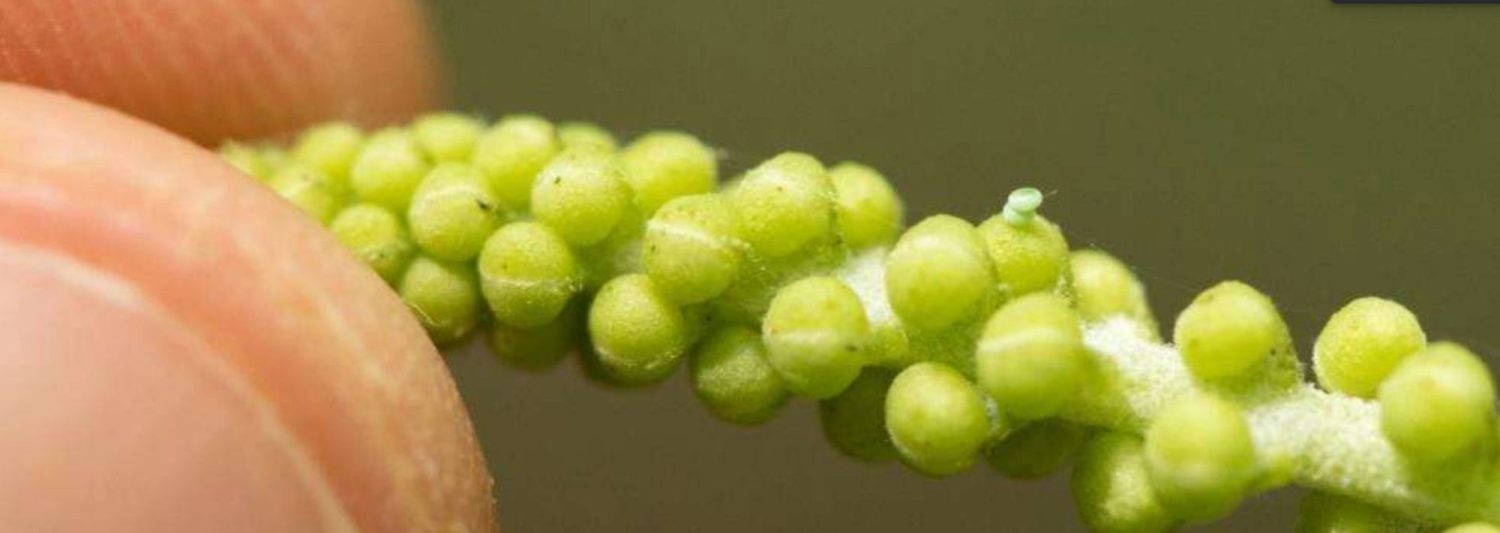
Several good photographs were taken of the adult ovipositing, and resting on nearby leaves. Eggs were counted during the survey. They were typically mounted firmly to the bottom side of a tight flower bud. They are round, rather flattened and smooth, with a small dimple in the center on the top. There were almost always eggs on the flower spikes, and most often just one or two per spike. We found one example of egg stacking, with two eggs being deposited in succession, one atop the other.
| Plants (Actaea racemosa) | |
| Plants with flower stalks | 181 |
| Plants w/ no eggs, caterpillars, or tending ants | 52 |
| Caterpillars | |
| Number of Plants with Celastrina Caterpillars | 77 |
| Total number of Caterpillars | 122 |
| Eggs | |
| Number of Plants with Celastrina eggs | 72 |
| Total number of eggs | 157 |
| Ants | |
| Number of Plants with Tending Ants | 77 |
| Total number of Tending Ants | 306 |
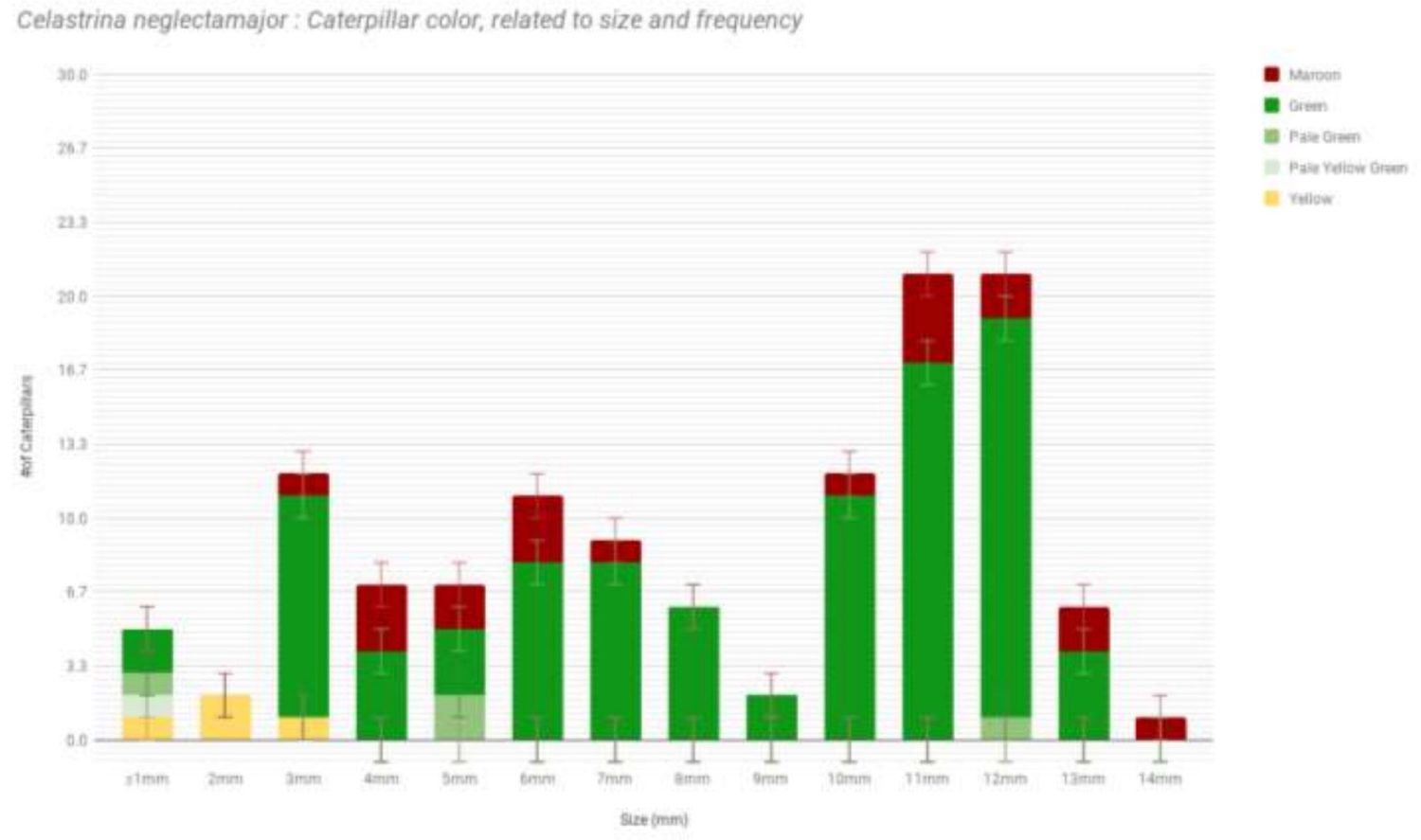
There were four size groupings evident in the data collected for the larvae, each presumably coinciding with each of the four instars expected of the species. The first instar was consistently pale yellowish-green to yellow. The second instars were mostly green, with two maroon exceptions. Those thereafter were mostly green, with some maroon examples, and several were a boldly patterned mix of maroon, brown, white, and green. Three examples of pure white caterpillars were found on one plant, one late instar, and two second instars.
It was clear that the earliest instar frequently entered the young flower buds of the Actaea flower spike, emptied its contents, and then exited through the same hole through which it entered. This pattern was often noted, from the top of the spike to the bottom, and often with a large late instar caterpillar on the flower stalk or upper set of leaves. On several occasions it was clear that the caterpillar had eaten all the buds, and even through the flower stalk, severing it midway.
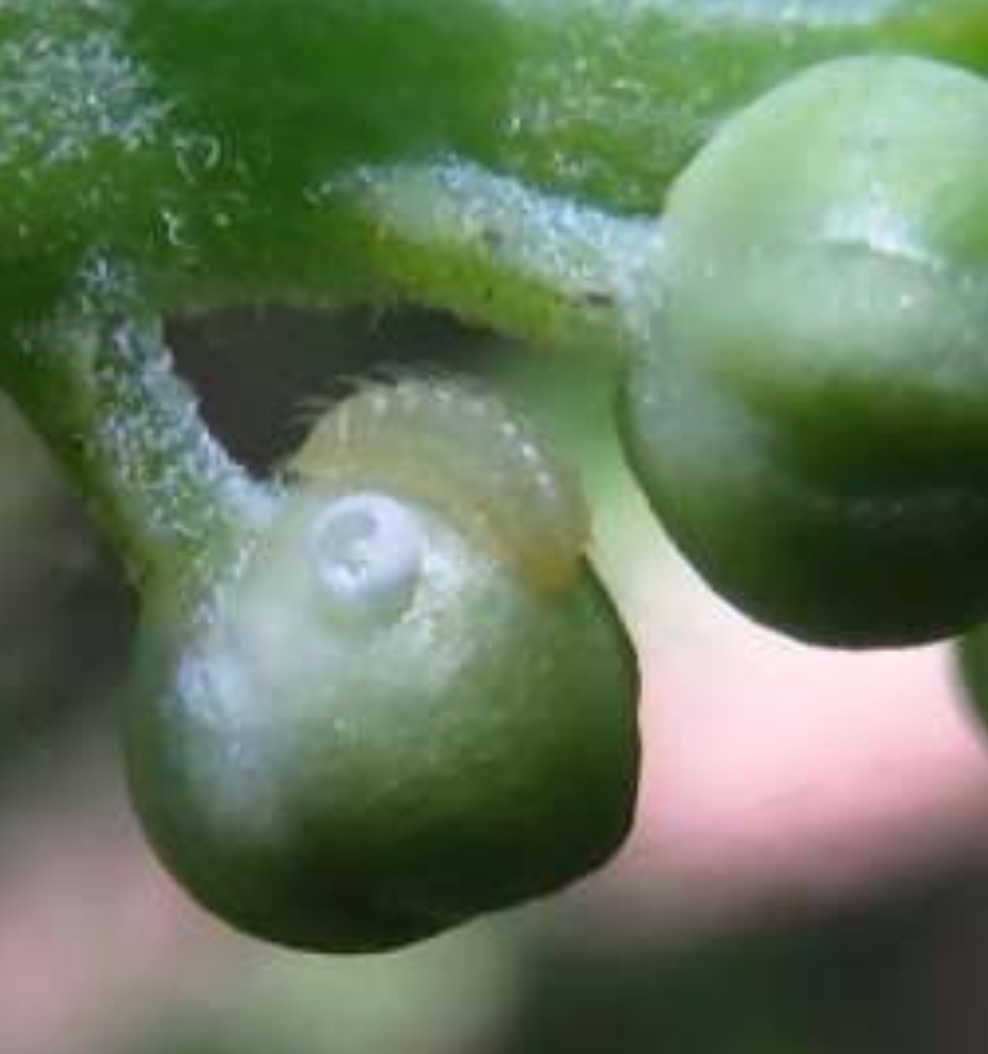
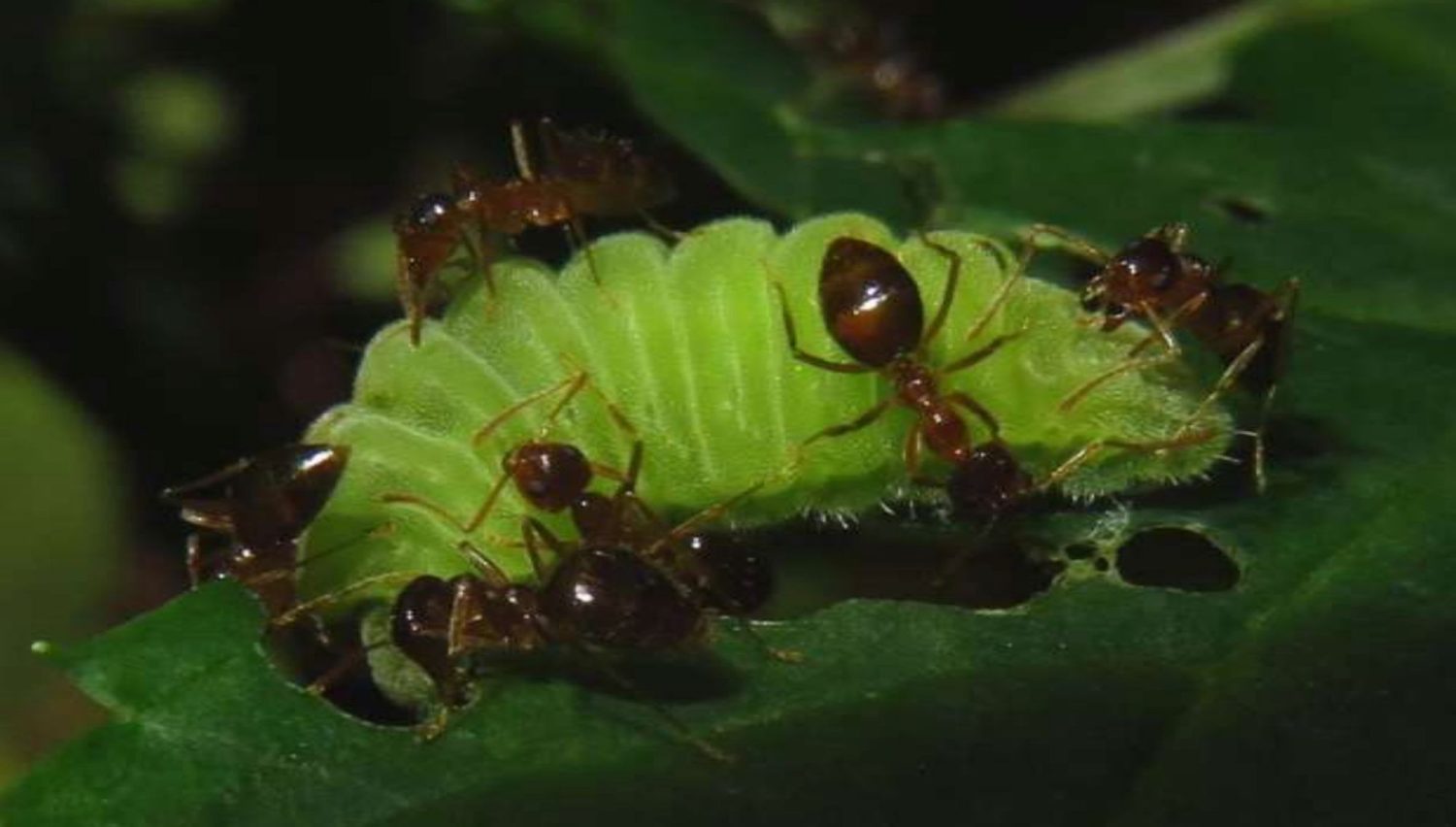
One caterpillar was very freshly emerged from an egg. Its color was very pale yellowish-green, and its setae were relatively short and low-arching. First instar caterpillars were often observed on the move, between buds, and in the grasp of predatory insects and small spiders. It was evident that the number of tending ants (and thus the predatory protection) was proportional to the size of the caterpillar. While first instar caterpillars most often had no tending ants, as many as 20 or more could be observed on some of the largest (12-13mm) fourth instar caterpillars.
The larger caterpillars were typically stretched along the bud or floret peduncel, with the feet clasping the main stalk, and the head busy consuming the flower bud. About the same amount were observed wrapped around buds while eating. This was particularly true of the second and third instar size range (4-8mm).
The first and second instars were notably tolerant of being handled or touched upon the plant. The larger caterpillars would sometimes curl and drop from the flower stalk, left dangling out of harm’s way by a thread until the coast was clear; and the climb and return to the florets would be begin. The ants guarding the caterpillars were typically slow moving, and sometimes entirely still, until contact was made. Upon moving the flower stalk, or touching the caterpillar, the ants would begin moving frantically. Many would jump to the ground. Some would leap upon the hand. But in no case were survey members bitten, contrary to the historic accounts of the ants being aggressive and quick to attack with a bite. Two sizes of ants, each with slight color variation, were observed. It was unclear whether they represented two species, or different sexes/phases of development.
Predators included several types of ambush bugs and spiders. Tiny jumping spiders were commonly seen stalking the tall wands of flower buds. Few predators were observed in direct contact with the caterpillars.
