
Little Bluestem
Schizachyrium scoparium
Click or tap the section titles below to learn more about this species!
CLASSIFICATION: What’s in a name?
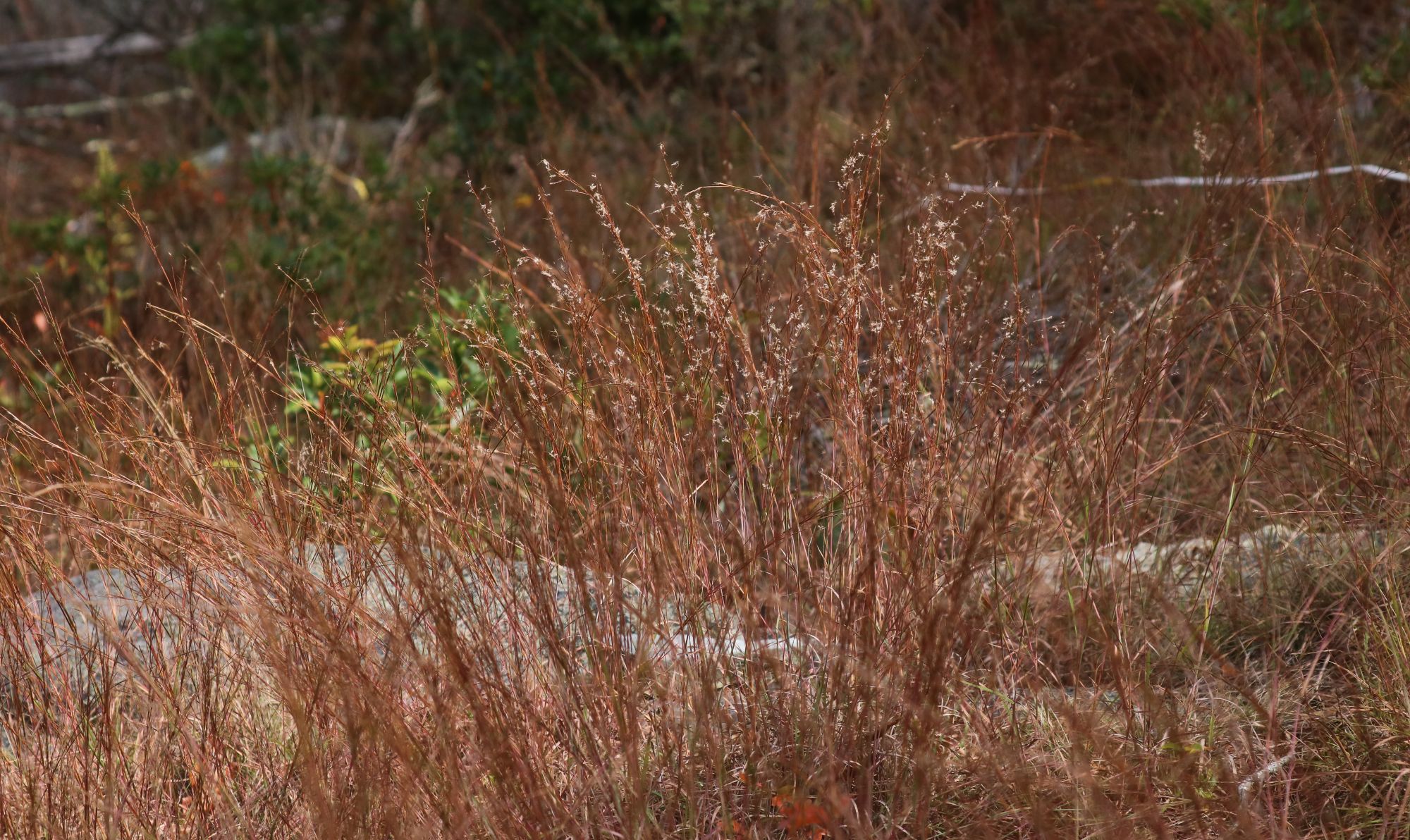
Scientific Name: Schizachyrium scoparium. The Genus name comes from the Latin schizein, meaning to split, and achyron, meaning chaff. The Species name, scoparium, means broomlike.
Common Name: Little Bluestem. This grass gets its common name from the chalky blue color the stems and leaves of many individuals have during the summer. It is a smaller plant than its relative Big Bluestem (Andropogon gerardi), which is a keystone of the Midwestern tallgrass prairies.
Family: Poaceae (Grass family). This is a massive family of plants, with around 11,000 species found worldwide. Grasses contain some of the most economically and culturally important plants in the world, including corn, wheat, rye, barley, bamboo, and sorghum.
IDENTIFICATION: What does it look like?
Average Height: 36 – 60 inches
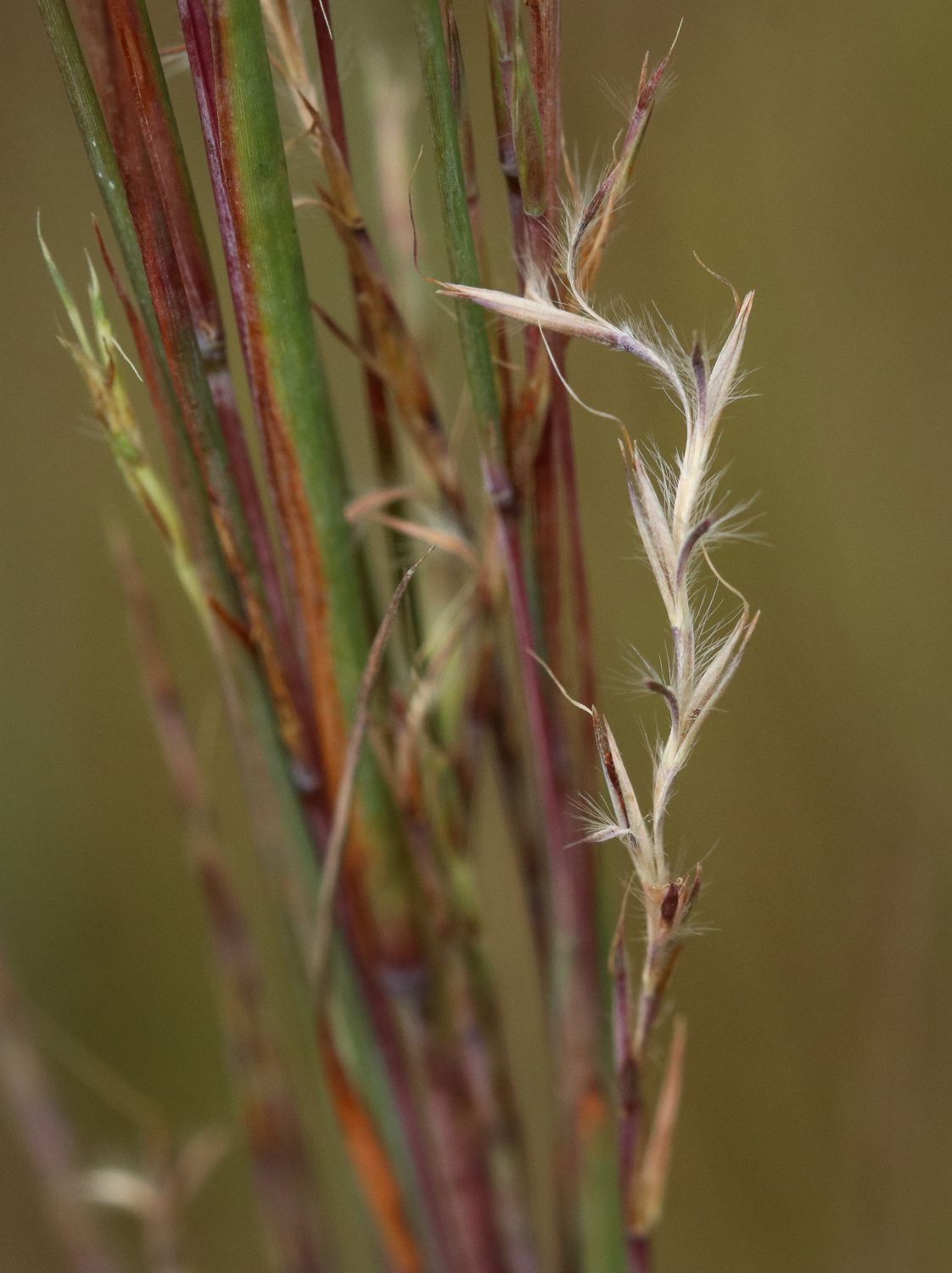
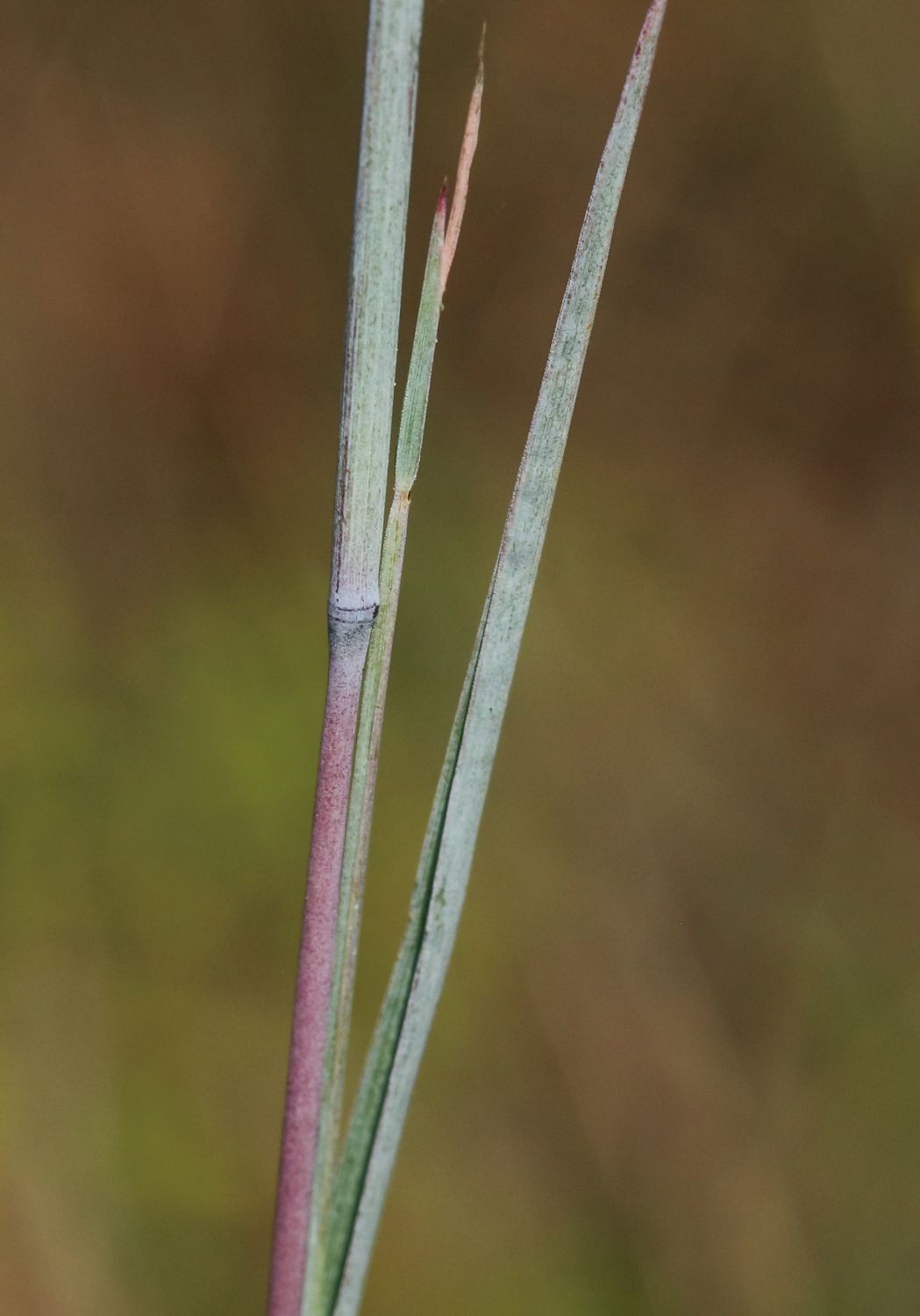
Description: A medium-sized grass with a dense clump of basal leaves, which are often curly. The stems, known in grasses as culms, arise in late summer and bear several leaves each, as well as the plant’s flowers and later, seeds. The leaves, like all other grasses, alternate along the stem and consist of two main parts: a sheath which wraps around the stem, and a blade perpendicular to it. The flowers are wind-pollinated, lack traditional petals, and grow in elongated, paired clusters on stalks that extend from a leaf sheath. Later, they ripen into dry seeds called caryopses enclosed in hairy bracts with a long awn attached.
Bloom time: Aug – Oct
Notes: 19th-century farmers kept native “insurance prairies” for hay use during droughts. Some old remnants survive today and serve as models for restoration.
LOCATION: Where is it at home?
Range: Found across a vast area of North America, from Arizona and Montana east to the Atlantic, south into Mexico, and north to Canada.2,3 In Virginia, it is common statewide and has been recorded in almost every county.5
Geology/Soil: Little bluestem can grow in a wide variety of soils, but is most common in dry sandy or rocky upland soils. It is not particular about soil pH or chemistry.
Habitat: Across its enormous natural range, little bluestem can be found in hundreds of different plant communities. Here in Virginia, you can find it growing in patch-prairies, savannas, woodlands, rock outcrops, glades, and sometimes in disturbed settings like hayfields and pastured lands.
CONNECTIONS: What are its relationships to other plants, animals, and humans?
Flora associations: In the Virginia Piedmont, some of the most common associates include yellow prairie grass (Sorghastrum nutans), gray goldenrod (Solidago nemoralis), narrow-leaved mountain-mint (Pycnanthemum tenuifolium), scaly blazing star (Liatris squarrosa), thoroughworts (Eupatorium spp.), and Small’s ragwort (Packera anonyma). In woodlands, one might find post oak (Quercus stellata), shortleaf pine (Pinus echinata), and pignut hickory (Carya glabra) growing above it. On bedrock outcrops, hairy lip fern (Myriopteris lanosa), Pennsylvania sedge (Carex pensylvanica), roundleaf fameflower (Phemeranthus teretifolius), and southeastern prickly pear (Opuntia mesacantha) share space in the crevices, which provide the only foothold for perennial plants.
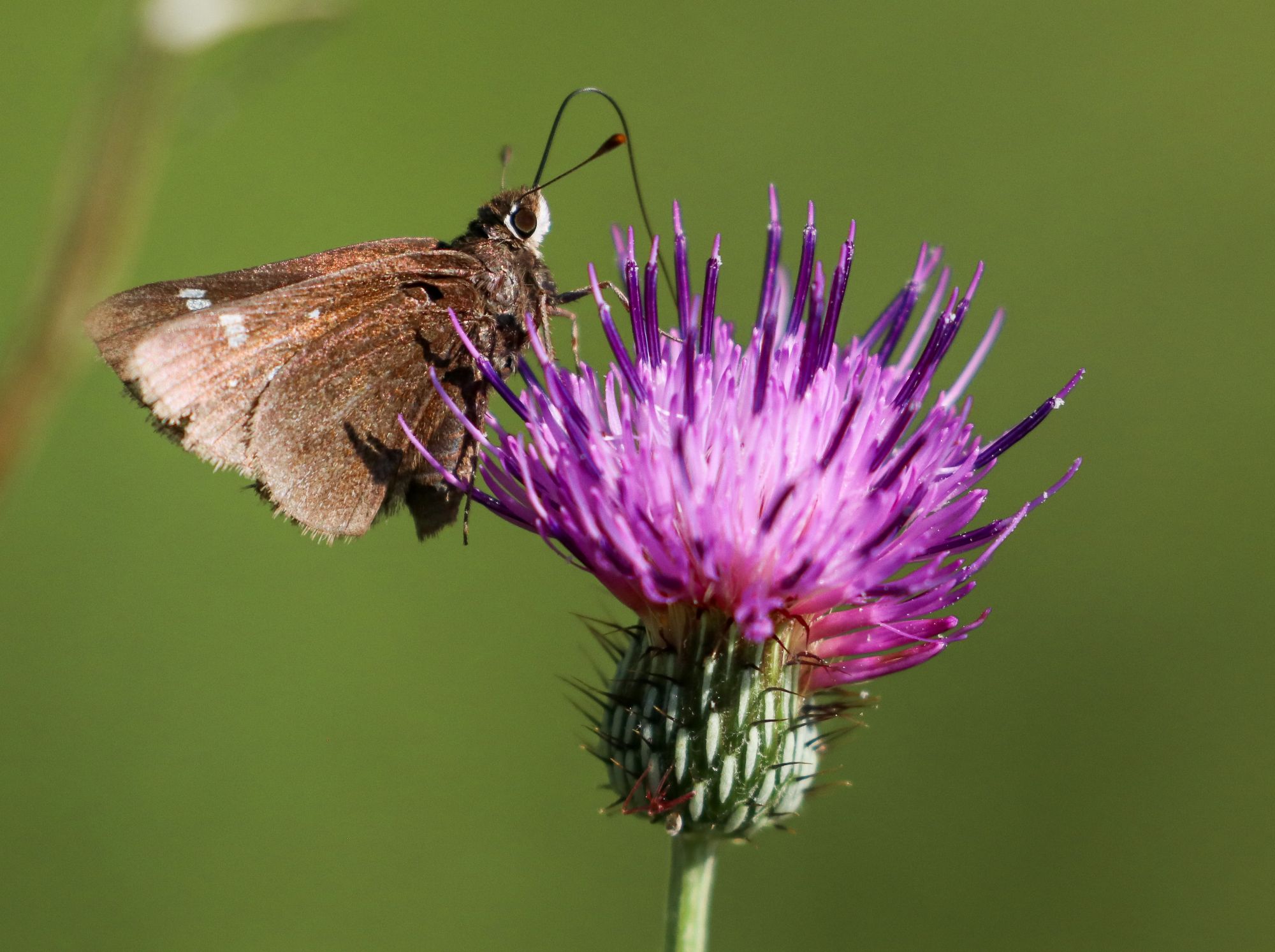
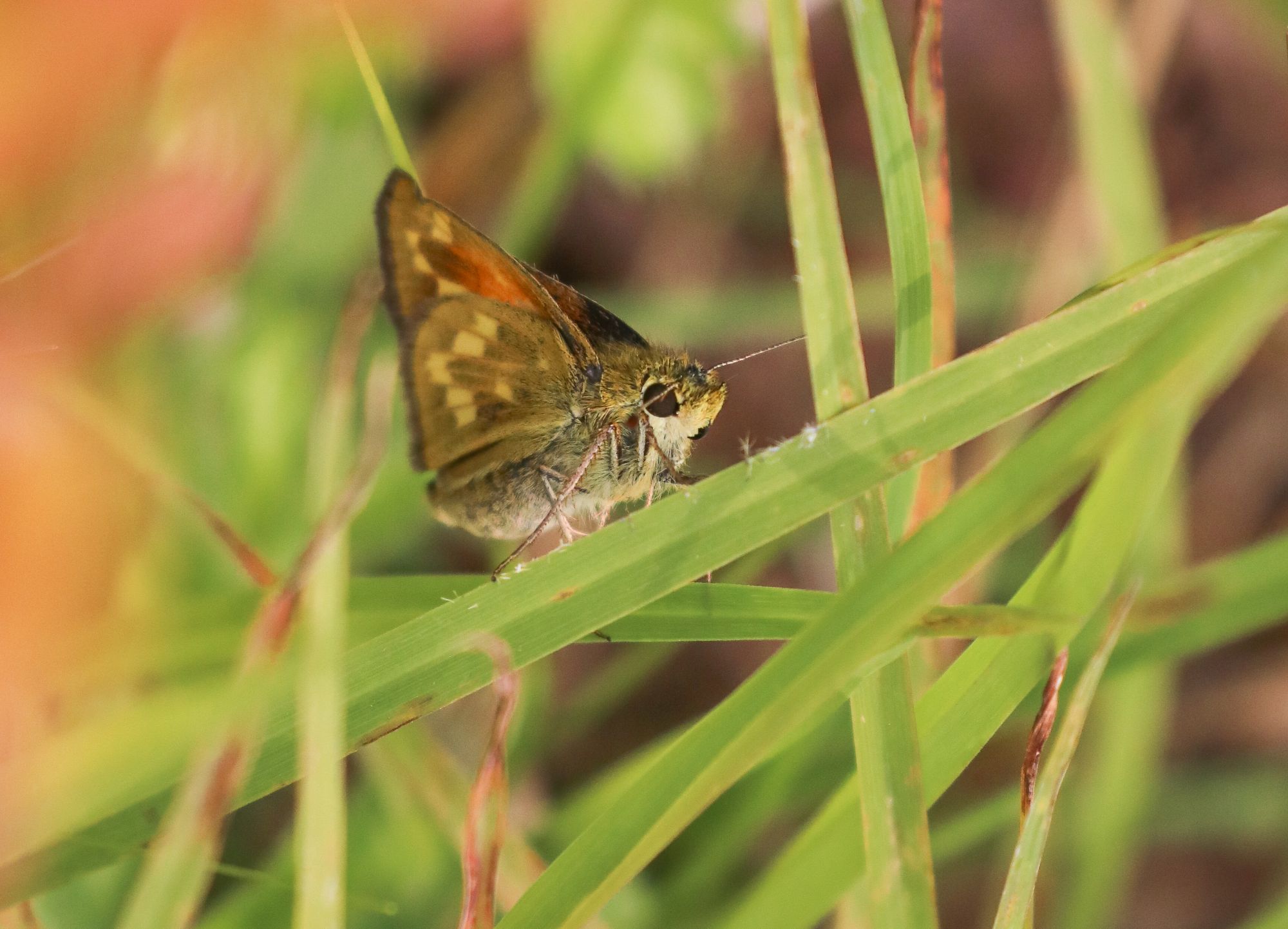
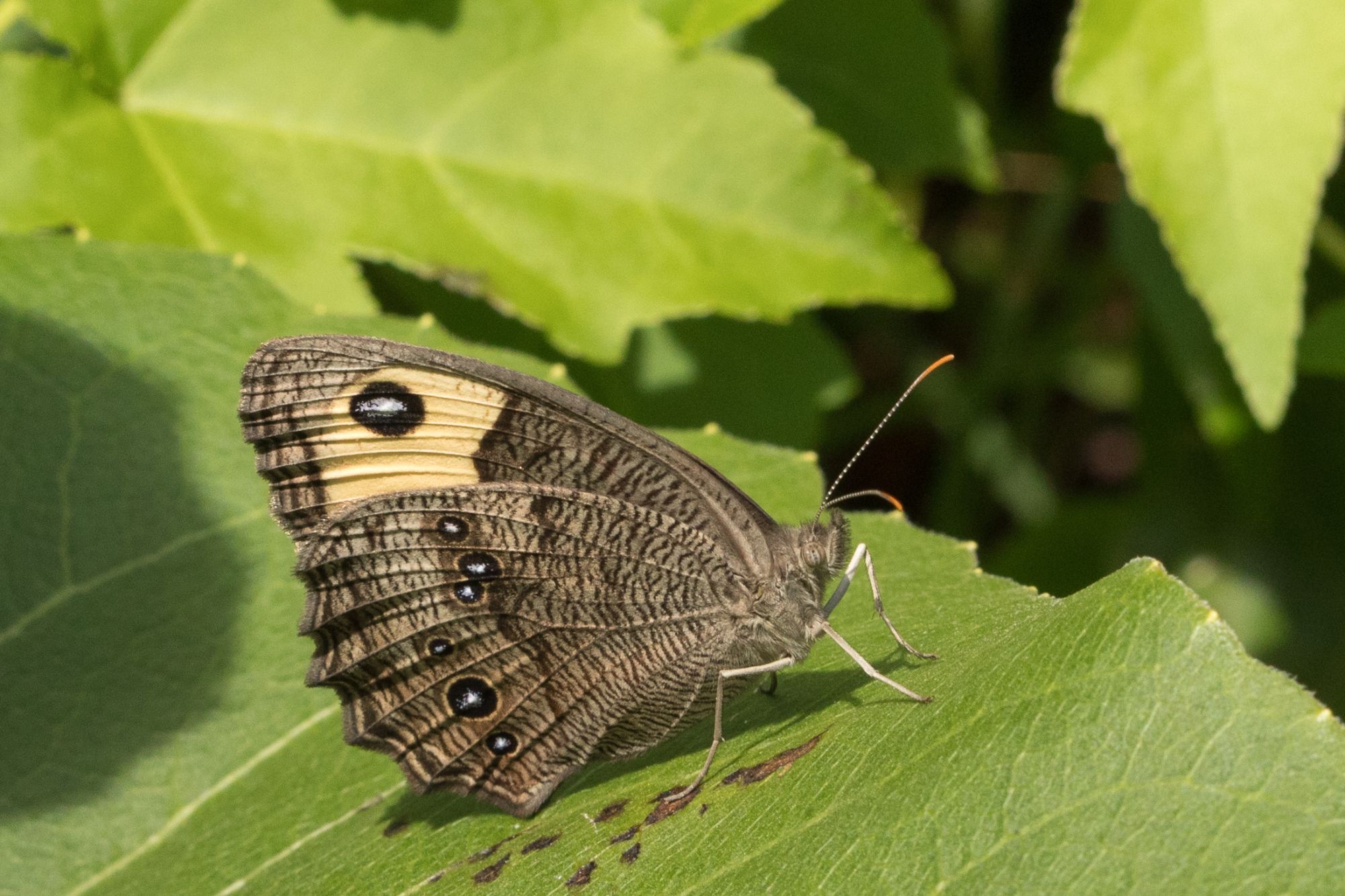
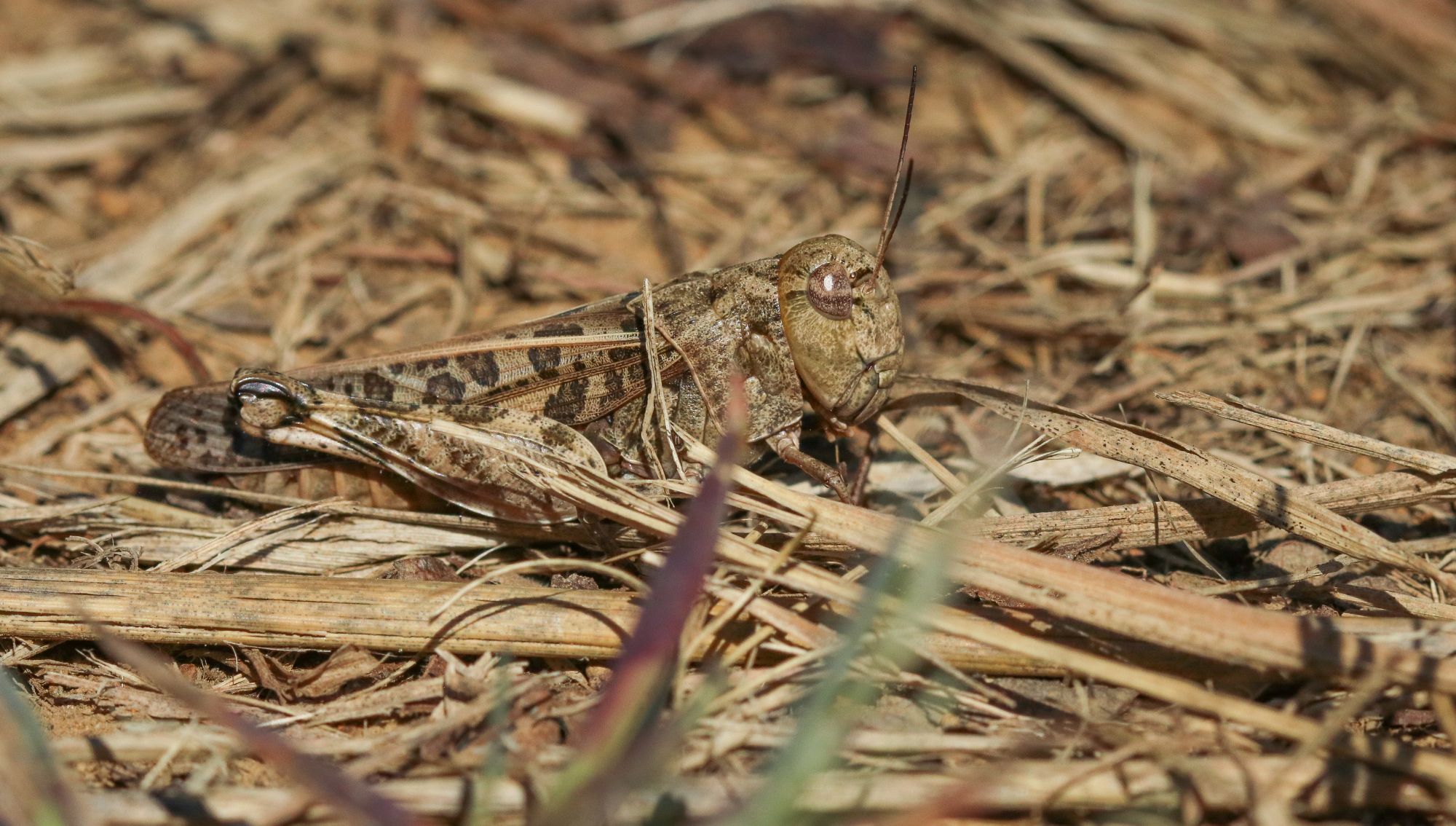
Fauna associations: Multiple butterflies rely on Schizachyrium scoparium as a larval host, including the common wood-nymph (Cercyonis pegala), dusted skipper (Atrytonopsis hianna), Indian skipper (Hesperia sassacus), and Leonard’s skipper (Hesperia leonardus). Native grasshoppers feed on its foliage, including the wrinkled grasshopper (Hippiscus ocelote), green-striped grasshopper (Chortophaga viridifasciata), Carolina grasshopper (Dissosteira carolina), and admirable grasshopper (Syrbula admirabilis).4 Intact native grasslands where Schizachyrium is abundant are also home to the rare prairie meadow katydid (Conocephalus saltans), northern bobwhite quail (Colinus virginianus), eastern meadowlark (Sturnella magna), and red-headed woodpecker (Melanerpes erythrocephalus). Historically, bison, elk, and other megafauna would have grazed on its nutritious vegetation.
Human associations: In modern times, little bluestem is often planted as an ornamental and used in grassland restoration. When expansive grasslands were common in the Piedmont, Indigenous peoples used little bluestem for insulation in their footwear.
Bibliography & Definitions
1 “Merriam-Webster Dictionary.” Merriam-Webster.com, 2026, www.merriam-webster.com/dictionary/caryopsis. Accessed 25 Mar. 2026.
2 “OregonFlora.” Oregonflora.org, 2026, oregonflora.org/taxa/index.php?taxon=188. Accessed 25 Mar. 2026.
3 Steinberg, Peter D. 2002. Schizachyrium scoparium. In: Fire Effects Information System, [Online]. U.S. Department of Agriculture, Forest Service, Rocky Mountain Research Station, Fire Sciences Laboratory (Producer). Available: https://www.fs.usda.gov /database/feis/plants/graminoid/schsco/all.html [2026, March 25].
4 Wheeler, Justin . “Plants for Pollinators: Little Bluestem.” Xerces Society, 15 Mar. 2017, xerces.org/blog/plants-for-pollinators-little-bluestem.
5 Virginia Botanical Associates. (2026). Digital Atlas of the Virginia Flora (https://www.vaplantatlas.org). c/o Virginia Botanical Associates, Blacksburg.
Definitions:
Awn: A narrow, bristlelike appendage.
Basal: Located at the base, usually referring to leaves that grow from the base of a plant rather than on the stem (basal leaves).
Blade: The part of a grass, sedge, or rush leaf which extends perpendicular to the stem, like a typical leaf.
Caryopsis (plural: caryopses): A type of dry fruit with a single seed, where the ovary is fused to the wall of the fruit. Familiar examples include corn and other cereal grains.
Culm: The stem of a grass, sedge, or rush.
Host plant: A plant that serves as the food source for a particular species, typically used in reference to butterflies and moths.
Sheath: The part of a grass, sedge, or rush leaf which is parallel to and wraps around the stem.