
Yellow Prairie Grass
Sorghastrum nutans
Click or tap the section titles below to learn more about this species!
CLASSIFICATION: What’s in a name?
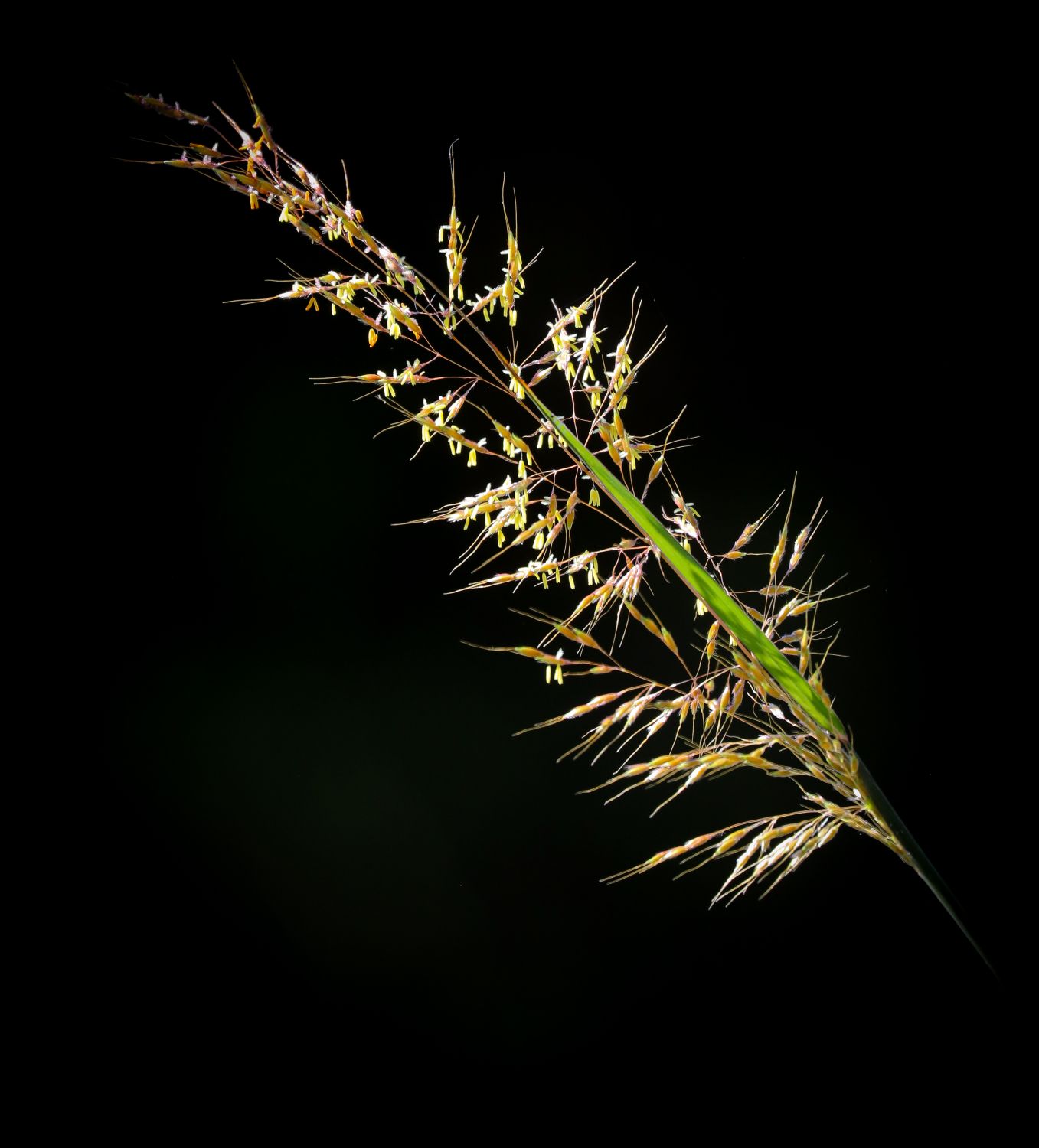
Scientific Name: Sorghastrum nutans. The genus Sorghastrum is derived from Greek and means an imitation of sorghum, which is a type of grass from the eastern hemisphere. Nutans is a Latin word meaning to nod or sway.1,2
Common Name: Yellow prairie grass. This name provides hints to what it looks like and where it grows. An important native grass in prairies and savannas, it also has small yellow flowers, seeds, and stems that turn golden brown in the fall. Other names that are commonly used include indiangrass and yellow indiangrass, although many people agree that we should no longer use these names. Just as we rethink and adjust scientific names as we learn more about plants, it is important to reexamine common names as well!3,4
Family: Poaceae (Grass Family). With around 11,000 species, you might not be surprised to hear that grasses are found on all continents! Grasses are an important source of food across the world—like wheat, oats, barley and rye! Corn and bamboo are grasses too!
What characteristics do grasses share? In general, they are not aquatic, have fibrous roots, and often have well developed horizontal stems from which new plants may grow. The usually erect stems have grass leaves composed of two parts—the blade (yep, a blade of grass!) and the sheath (the part of the leaf encircling the stem). The leaves grow alternately at the nodes of the stem and have parallel veins. Grasses are also adapted to withstand grazing and fire. There are many different strategies that grasses use to reproduce. Some grasses reproduce through cross pollination, while others are able to self-fertilize or spread clonally through underground horizontal stems. Although they may appear similar, sedges (Cyperaceae family) and rushes (Juncaceae family) differ enough that they are placed in their own families.5,6
IDENTIFICATION: What does it look like?
Average Height: 3-7 feet
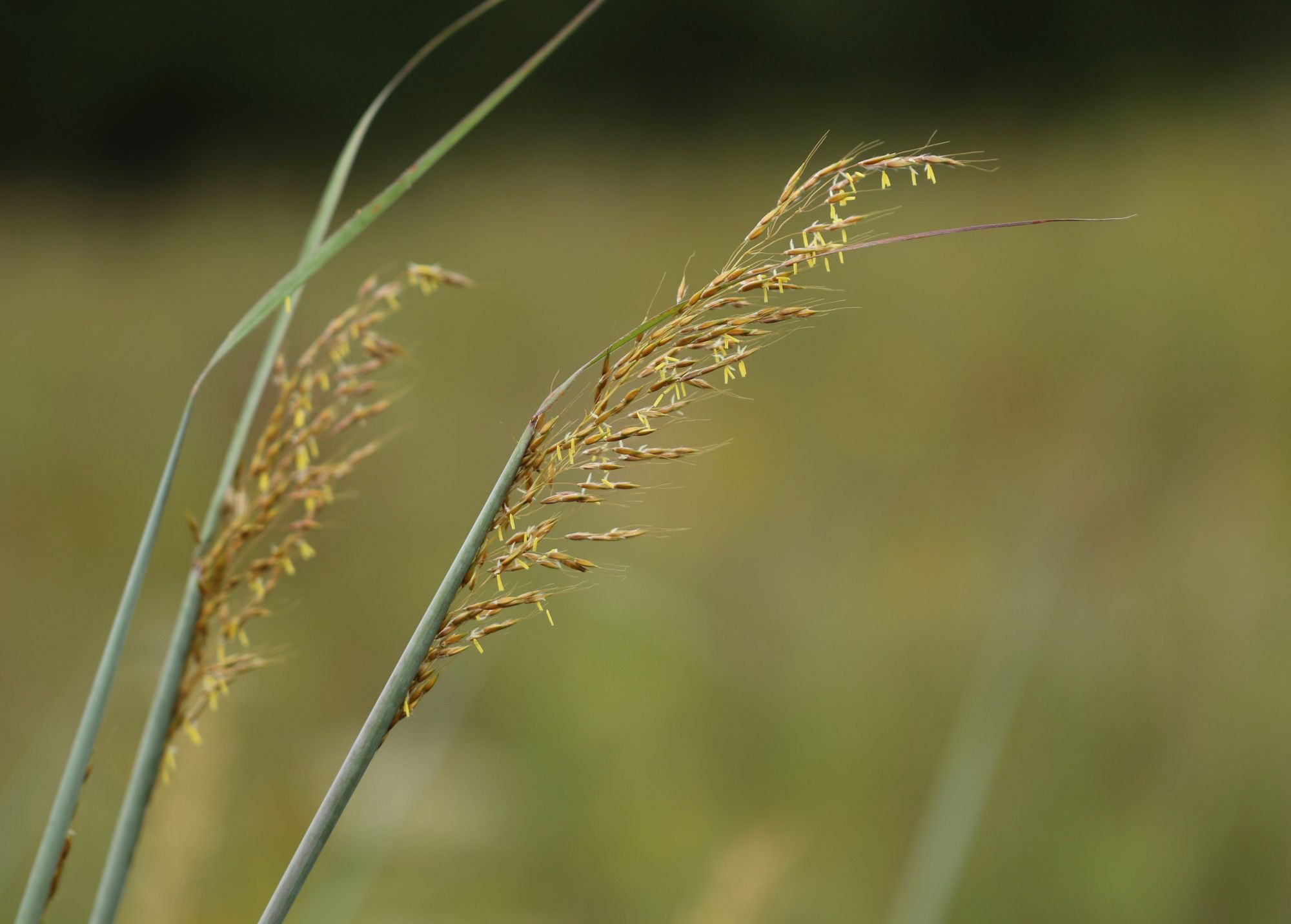
Description: A perennial, warm season grass with rhizomes. The hairless, round stems grow in loose bunches and have leaves alternating on the lower half on the stems. The green to bluish-green leaf blade measures up to ½” wide and 27” long and is typically hairless, as are the leaf sheaths that encircle the stem. Gently pulling back the leaf blade from the stem reveals a white membrane called a ligule and two pointed “ears” or “horns” extending up from the sheath—a feature that can be helpful when identifying this grass! At the end of each fertile stem is a narrow, branched plume bearing flower clusters called spikelets. At the base of the fertile spikelets are a pair of bracts called glumes, one of which is covered in hair while the other is not. An awn with one bend extends up to an inch from the spikelet. Flowers are pollinated by the wind, and during that time the branches of the panicle are looser and further from the stem. After pollination, as the seeds mature, the branches of the panicle are held more tightly upright along the stem. The leaves and seed heads become a golden brown in the fall.1,5,7,8
Bloom time: Sep – Nov
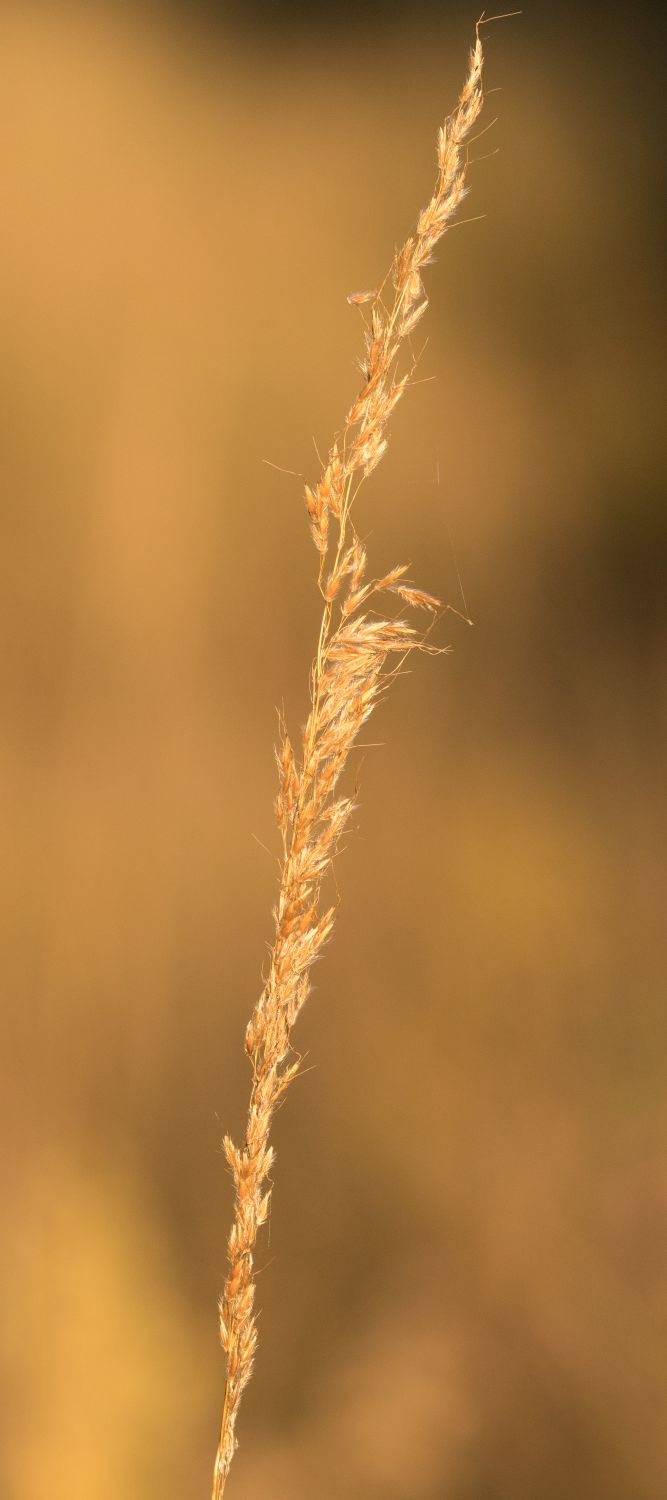
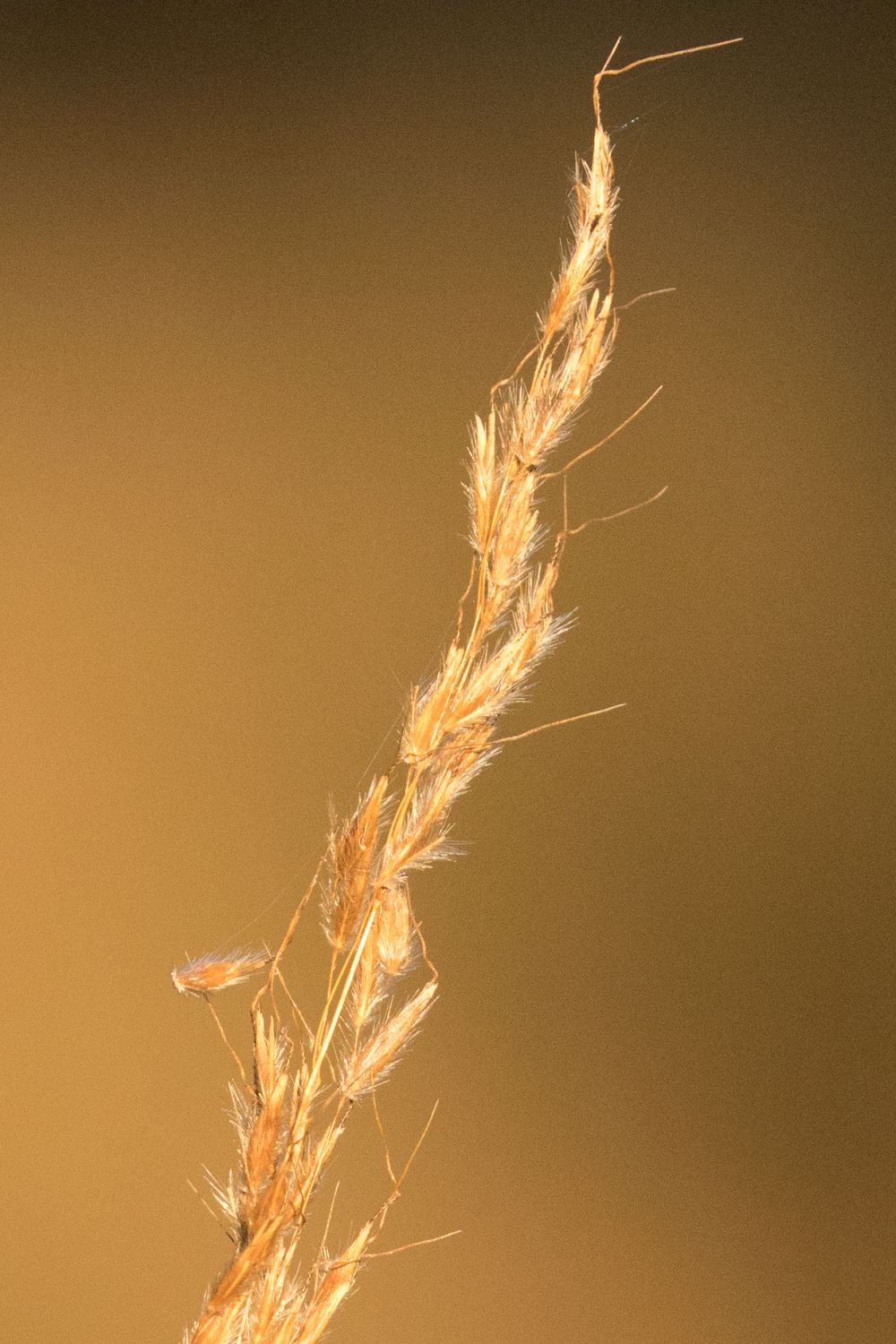
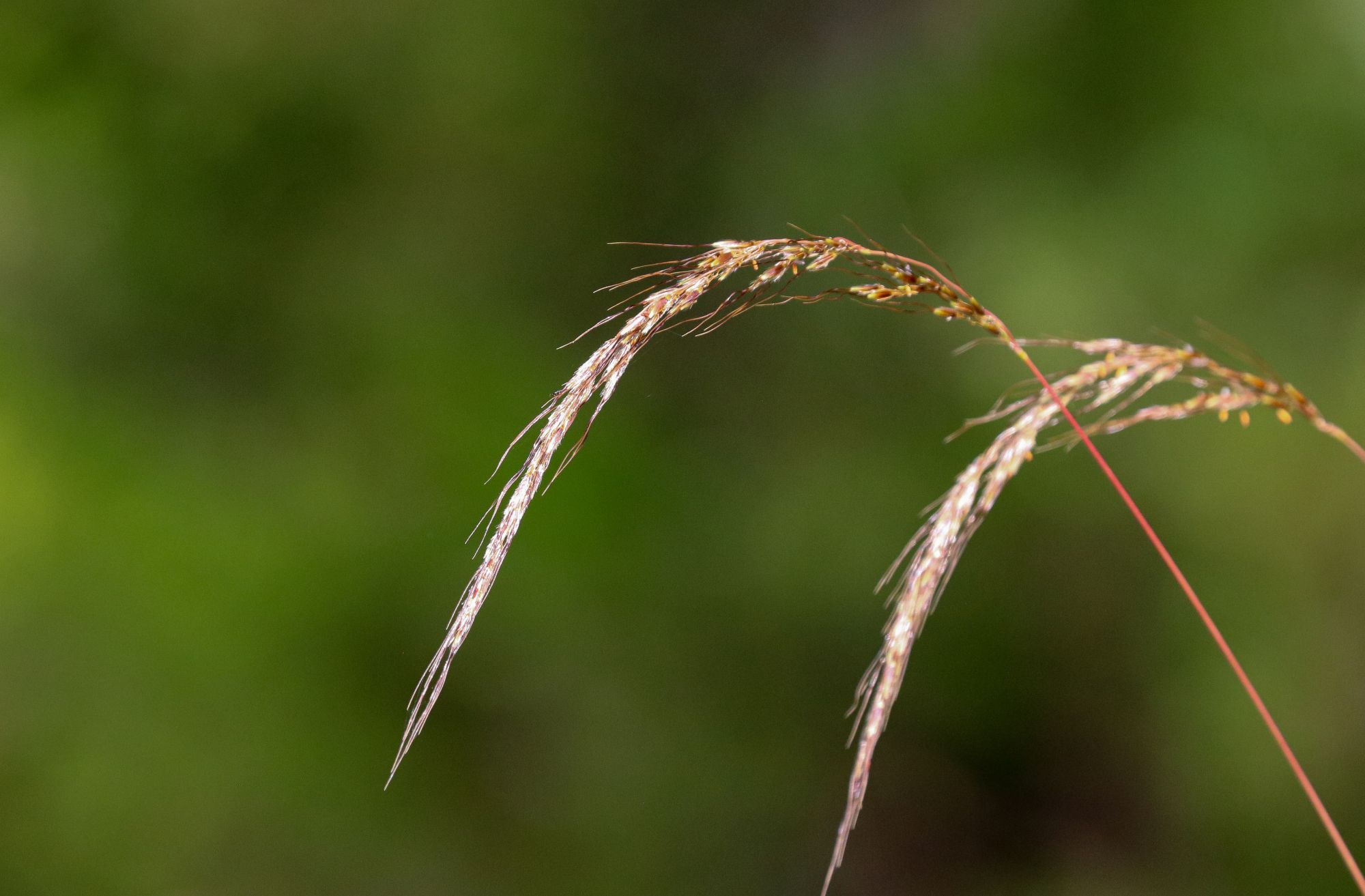
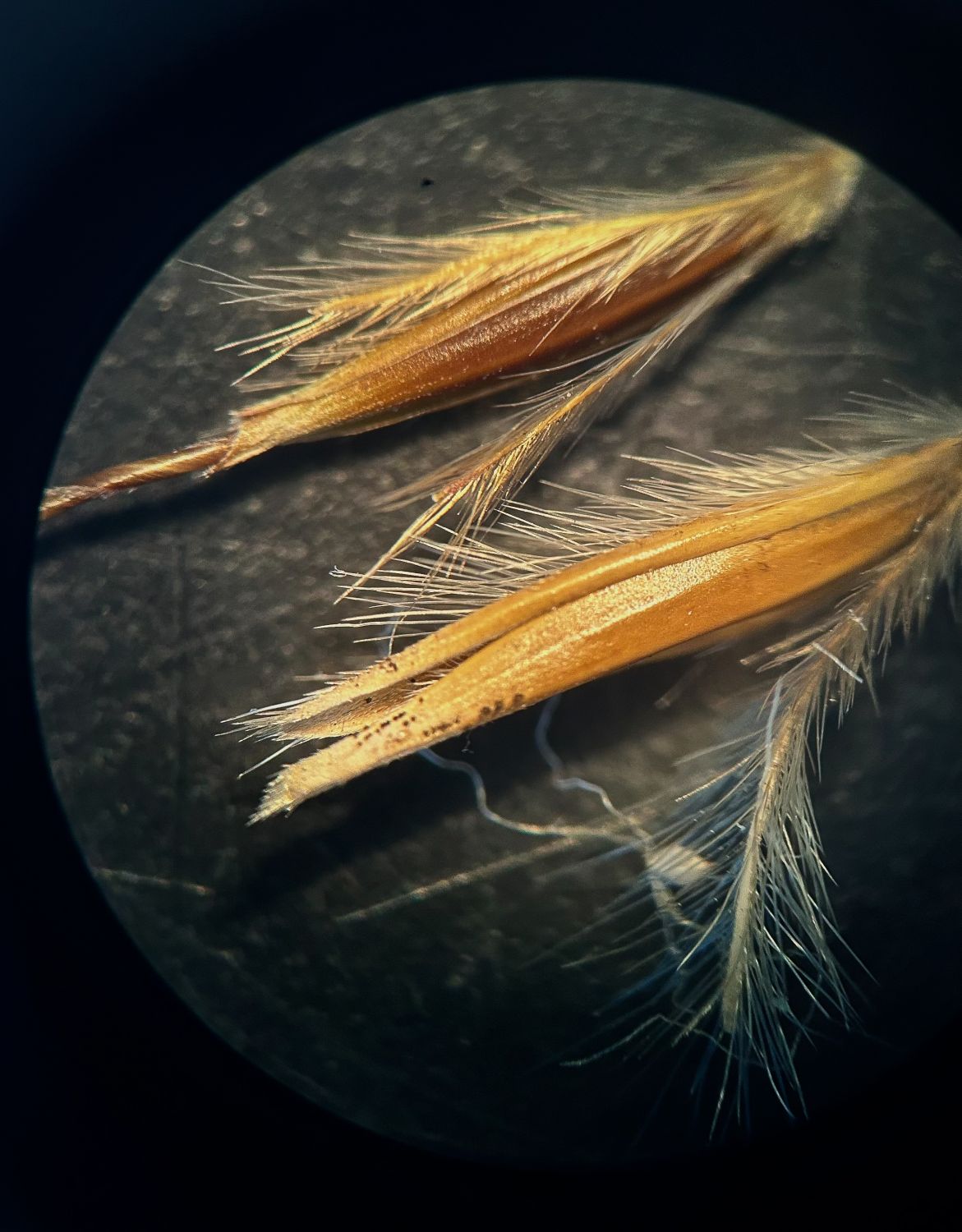
Notes: The similar species Sorghastrum elliottii (long-bristle prairie grass) can be distinguished by its bending seed heads that are a darker brown in color (due to the brown bracts—see photos below!) and its typically longer awns that bend abruptly in two places (versus one).5
LOCATION: Where is it at home?
Range: Found throughout most of the state, it’s considered common except in parts of the eastern Coastal Plain where it’s infrequent or rare.10 Range extends from Quebec and Maine west to Saskatchewan and Montana south to Arizona and east to Florida.11
Geology/Soil: Capable of growing in a wide variety of soils including heavy clays, sand, loam, gravel, and poor, dry soils, but prefers dry to moist, well-drained soils.1,7,9
Habitat: Associated with many types of grasslands, including dry woodlands, prairies, savannas, barrens, as well as roadsides and old fields. One of the dominant species in the tall grass prairies of the midwest.5,7,10
CONNECTIONS: What are its relationships to other plants, animals, and humans?
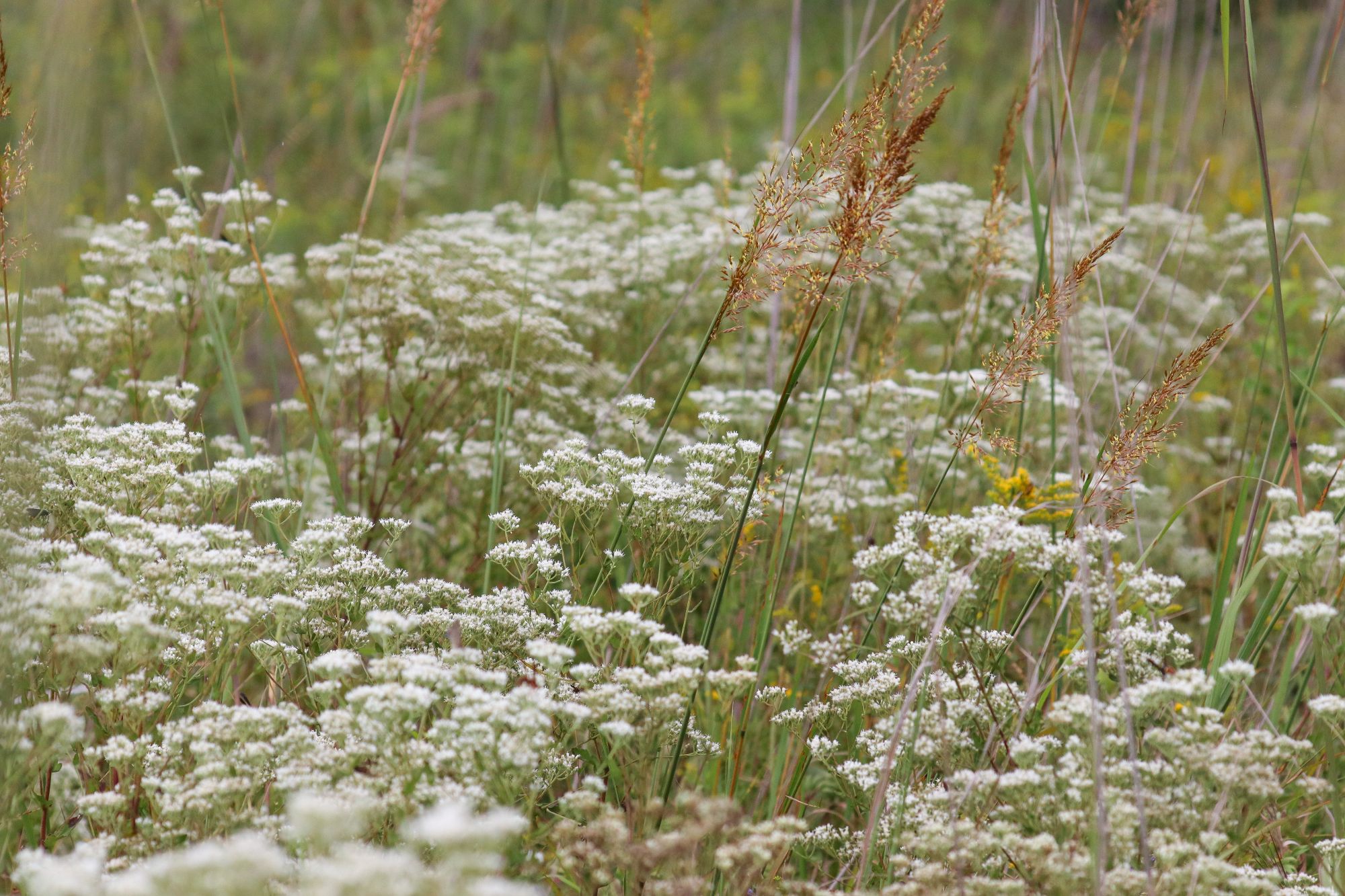
Flora associations: An important grass in prairies and savannas, Sorghastrum nutans may be found growing alongside other grasses such as little bluestem (Schizachyrium scoparium), broomsedges (Andropogon spp.), silver plumegrass (Erianthus alopecuroides), as well as numerous other herbaceous plants such as goldenrods (Solidago spp.), thoroughworts (Eupatorium spp.), bush-clovers (Lespedeza spp.), tick-trefoils (Desmodium spp.), mountain-mints (Pycnanthemum spp.) and many more! Native grasslands can be extremely diverse, with more than 100 species in a 100m2 area!
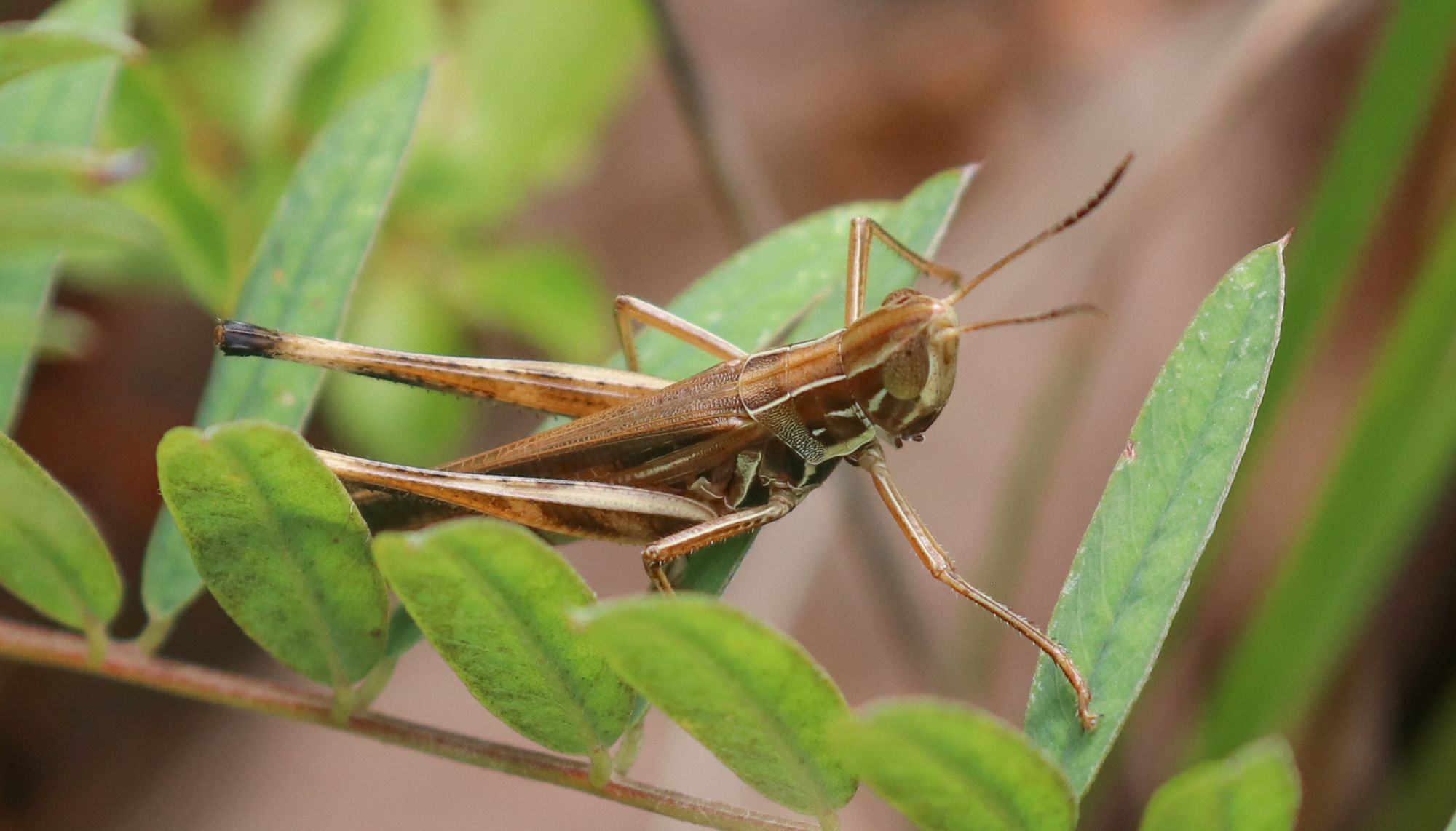
Fauna associations: A number of insects may be found feeding on Sorghastrum nutans, including a number of grasshoppers, leafhoppers, and planthoppers. Among those that prefer yellow prairie grass are the admirable grasshopper (Syrbula admirabilis) and a type of shovelhead leafhopper (Attenuipyga vanduzei). In addition, yellow prairie grass is a host plant for the pepper and salt skipper (Amblyscirtes hegon). Cattle and bison will graze on it, while small mammals and birds eat the seeds. This tall grass provides cover for white-tailed deer, and in the context of sufficiently large grasslands, it provides cover and nesting sites for birds such as the eastern meadowlark (Sturnella magna), northern bobwhite (Colinus virginianus), and field sparrow (Spizella pusilla).7,9
Human associations: Indigenous people dye the grass and use it to create baskets and mats.8
We want these plants to thrive and for everyone who gets to visit the park to enjoy them, so remember – don’t pick flowers or other parts of the plant!!
Bibliography & Definitions
1 “Sorghastrum Nutans – Plant Finder.” Www.missouribotanicalgarden.org, www.missouribotanicalgarden.org/PlantFinder/PlantFinderDetails.aspx?kempercode=g780. Accessed 16 Dec. 2024.
2 “Nutant.” Merriam-Webster.com Dictionary, Merriam-Webster, https://www.merriam-webster.com/dictionary/nutant. Accessed 16 Dec. 2024.
3 “North Carolina Botanical Garden – Sorghastrum Nutans.” Floraquest.org, 2023, floraquest.org/plant/show.php?id_plant=SONU2. Accessed 16 Dec. 2024.
4 Meyer, Mary Hockenberry. “What’s in a Name: Yellow Prairie Grass.” Nurserymag.com, 4 Feb. 2022, www.nurserymag.com/article/whats-in-a-name–yellow-prairie-grass/. Accessed 16 Dec. 2024.
5 Weakley, A.S., J.C. Ludwig, and J.F. Townsend. 2012. Flora of Virginia. Bland Crowder, ed. Foundation of the Flora of Virginia Project, Inc., Richmond. Fort Worth: Botanical Research Institute of Texas Press, pp. 1188,1315.
6 Campbell, Christopher S. “Poaceae – Characteristic Morphological Features.” Encyclopædia Britannica, 2019, www.britannica.com/plant/Poaceae. Accessed 16 Dec. 2024.
7 “Indian Grass (Sorghastrum Nutans).” Www.illinoiswildflowers.info, www.illinoiswildflowers.info/grasses/plants/ind_grass.htm. Accessed 16 Dec. 2024.
8 Brakie, M. 2017. Plant Guide for Indiangrass (Sorghastrum nutans). USDA-Natural Resources Conservation Service, East Texas Plant Materials Center. Nacogdoches, TX 75964.
9 “Sorghastrum Nutans (Indiangrass, Yellow Indiangrass) | North Carolina Extension Gardener Plant Toolbox.” Plants.ces.ncsu.edu, plants.ces.ncsu.edu/plants/sorghastrum-nutans/. Accessed 16 Dec. 2024.
10 “Digital Atlas of the Virginia Flora | Sorghastrum Nutans (L.) Nash.” Vaplantatlas.org, 2024, www.vaplantatlas.org/index.php?do=plant&plant=1705&search=Search. Accessed 17 Dec. 2024.
11 “NatureServe Explorer 2.0.” Natureserve.org, 2024, explorer.natureserve.org/Taxon/ELEMENT_GLOBAL.2.146412/Sorghastrum_nutans. Accessed 17 Dec. 2024.
Definitions:
Awn: A narrow, bristlelike appendage.
Glume: One of the paired bracts at the base of a flower cluster.
Ligule: A membranous appendage located on the upper part of a leaf where the blade of a grass leaf joins the sheath.
Rhizome: A horizontal, underground stem from which a new plant may grow.
Panicle: An elongated cluster of flowers with multiple branches, where the flowers bloom starting at the bottom and moving upwards.
Spikelet: A flower structure made up of a spike of tiny flowers without petals, enclosed at the base by bracts.