
Uncategorized
A Young Forest…4 inquiries

Jan
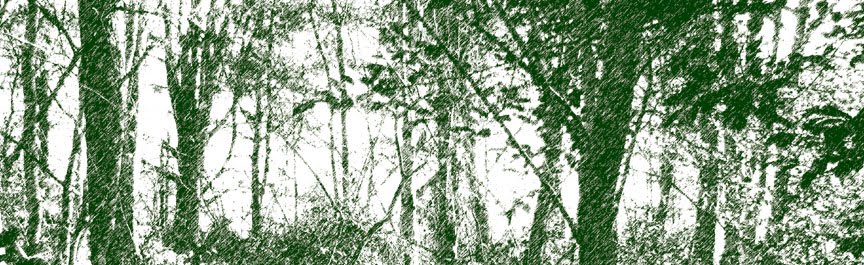 We continue to explore the pines. Despite the beauty of the big and open woods to the south and west, despite plans to “turn right” at the trail split, this class of children continues to be drawn toward the young pines. Maybe it’s the density of weedy growth, the multitude of habitats in this diverse and changing forest, or the fallen trees covering the ground. Maybe it’s the unmistakable appearance of being young, vibrant and in transition. Whatever it is, today we found ourselves discovering new things, again.
“How old is this forest?”
 Right now the pines of this forest are making way for the next forest….a deciduous one. Maples, poplars, and oaks are beginning to reach high, shading out those pines. How long will it be before the pines are gone?
With trails being installed, many of the fallen trees have been cut. This reveals their rings! Those rings are like words on a page…they tell stories. Every year, a tree adds one layer of growth…one ring. If you count those growth rings, you will know how old the tree was when it died.
We counted rings, and here’s what we found:
- Cedar: 60 years
- Pine: 36 rings
- Pine: 36 rings
- Pine: 25 years
- Pine: 19 rings visible (exterior rings rotted away)
- Pine: 11 rings visible (exterior rings rotted away)
There’s a story in these numbers.
About 60 years ago, an Eastern Red Cedar sprouted. This probably happened in an open field and there were probably other cedars populating this field at the same time (cedars will quickly populate abandoned fields or pastures).
By around 36 years ago, Virginia and Short-leaf Pine trees were sprouting around the cedars. The field is beginning to look like a forest! In fact, it was probably so dense that you would have a hard time walking through it. Imagine tightly packed pine saplings with blackberry brambles filling the open spaces in between! I’ll bet the critters loved this.
The pines kept growing. Deciduous trees began sprouting not too long after the pines appeared, and all of them are racing upward, reaching for light. Eventually, the deciduous trees will win the race. The pines will continue to fall until most or all are gone. Occasionally an old short-leaf pine will linger…and it will likely be the oldest tree in that forest.
Checking the historic record.
It looks like the tree rings are telling a fairly accurate story. See the aerial photos below.
Part II.
The Search for a new pine:
To date, Virginia Pine and Short-leaf pine have been discovered. The kids brought pine needle bundles to me fairly continuously. “Is this new?” “Is this different?”. Most of the pine needles where in bundles of 2 and 3. But, a new discovery was made! Bundles of 5! (The Key Has been updated : LINK)
 Part III.
Habitats within habitats.
There is evidence of all sorts of habitats, big and small.
Small: a leaf gall. A wintertime habitat for a wasp larvae.
Medium: a hole in the ground, below an old stump. The kids guessed that it was likely a groundhog hole. The perch above it inspired  thoughts of a great-horned owl stalking the groundhog (Owls have been visiting this forest (an owl pellet was found a few weeks ago).
Large: the soil, the forest…it is one big living organism. The more we look, the more we find. The plants are dormant, and the animals secretive. But, even in winter, clues of their activity are everywhere! Habitats within habitats are everywhere!
Part IV. An Odd Pod.
I knew what it was, and I knew it had been transported here by something. Sycamore trees grow where it’s wet, near streams…not on dry hilltops! Sure enough, with a quick look around, there were no sycamores. This odd pod is comprised of hundreds of tiny seeds held together in the shape of a sphere. Squeeze them and Poof! I have a feeling we’ll be in the land of sycamores by spring…down by the creek.
