
Creature Feature
Non-Biting Midge

Feb
by Paul Cipriani
edited by Rachel Floyd
Family: Chironomidae
Other common names: Chironomid, Midge
“…I feel, in every midge that hums,
Life, fugitive and infinite,
And suddenly the world becomes
A part of me and I of it.”
Excerpt from “Amends To Nature” by Arthur Symons
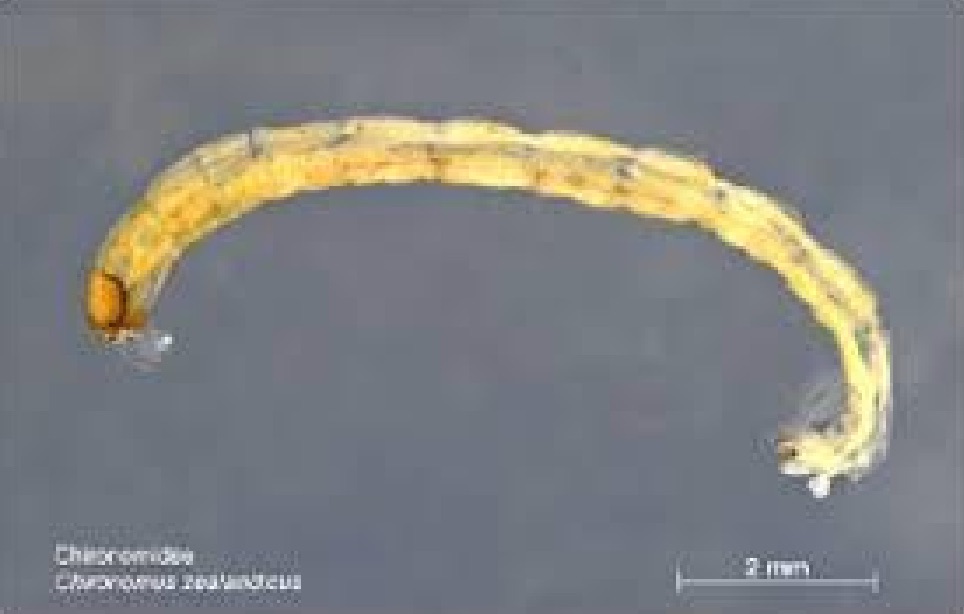
Distinguishing Features/Description: Chironomids are small, flying insects with two sets of clear wings and long front legs. The body color varies between species, ranging from light olive to black. In their larval form, chironomids are small and worm-like, with segmented bodies that include a head and “prolegs”. It’s difficult to tell the various species of non-biting midges apart without the aid of a microscope. Chironomids belong in the order Diptera, making them “true flies”. These midges can look very similar to mosquitos, but are not biting insects. Male midges can have feathery antennae, while female midges have slender antennae.
Distribution and Habitat: Found all over the world, there are up to 2000 species of chironomids in North America alone. Both larvae and pupae can be found in any aquatic environment, while adults can be found swarming around these same environments while mating. Some midges also lay eggs in environments such as decaying vegetation, under tree bark, and soils that are saturated with water. As a testament to their widespread and adaptable existence on Earth, the largest land animal on Antarctica is Belgica antarctica, a wingless non-biting midge, capable of withstanding the climate of Antarctica year round. It measures no more than a quarter of an inch, but is the only animal of its size that can adapt to the harsh conditions on land full time.
Ecology and Life History: Chironomids can be the most abundant macroinvertebrate in some aquatic environments. This points to their importance as a food source for many aquatic predators; sometimes as their main food source. As an insect that is present all year round, they can even furnish sustenance to trout during the winter and are often seen hatching while snow lines the banks of mountain streams. The larvae of non-biting midges live on the bottom of waterways, sometimes in tubes of silk. During metamorphosis, larvae pupate on the bottom and swim to the surface of the body of water, emerging from their skins in their adult form. Adults live for only a few days; long enough to mate and lay eggs. Some midges respond well to poor water quality, proliferating in waters with excessive levels of nutrients. Some chironomid larvae are red in color, due to the hemoglobin they use to transport oxygen throughout their bodies, allowing them to live in environments with low dissolved oxygen.
Chironomids and Humans
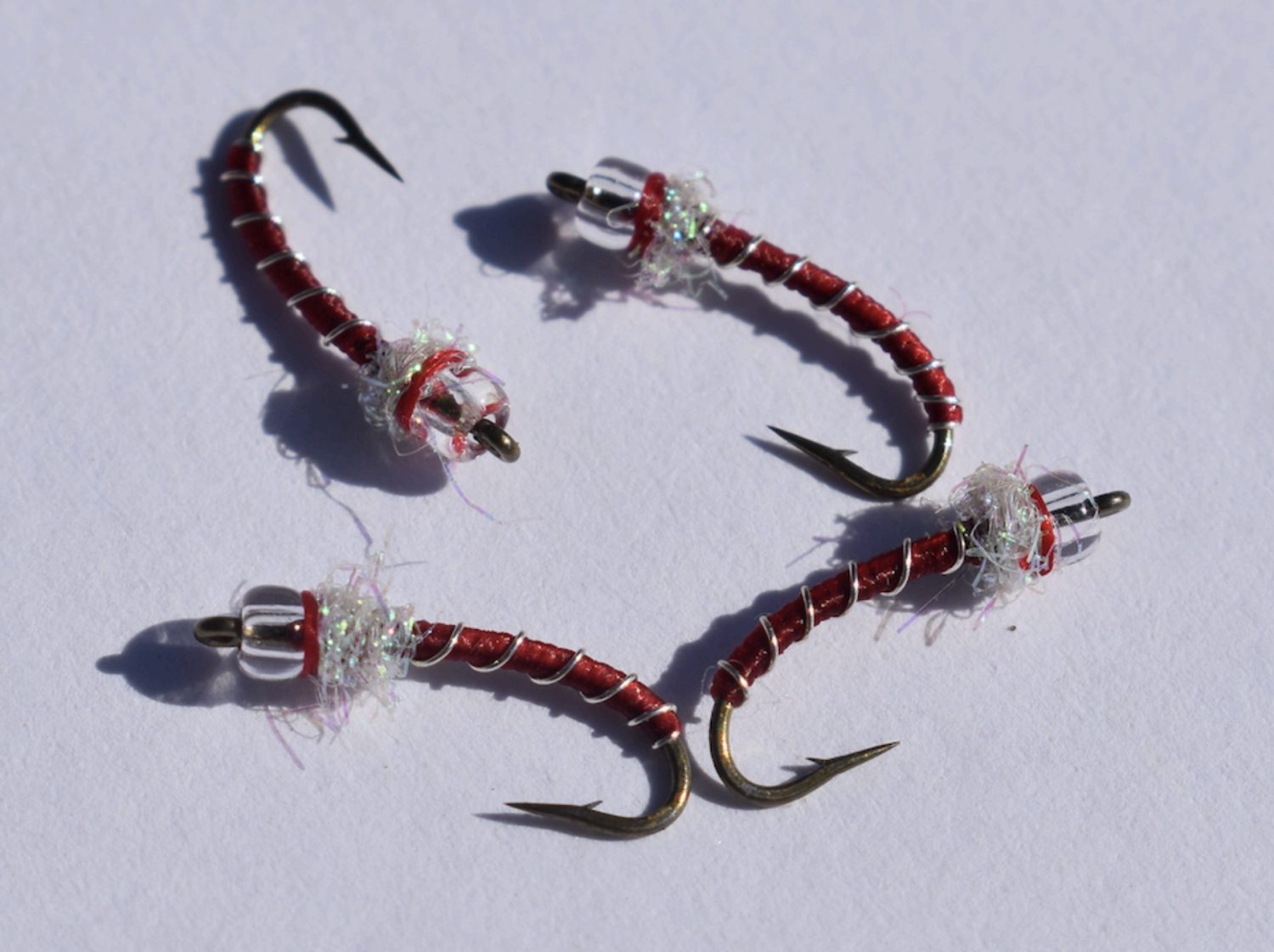
Anglers can study their local Chironomids as a way to increase their chances of catching trout during the winter. As an insect associated with waterways that hatch all year round and provide the bulk of the macroinvertebrate forage for various aquatic predators, non-biting midges need to be considered when selecting imitations during the winter. Anglers have developed countless imitations of larval, pupal, and adult chironomids, utilizing a combination of thread, feather, and hook to mimic these plentiful insects and “match the hatch”. This results in the ability to present their notoriously picky quarry with their preferred meal of the moment.
Works Cited
“Fly Fisherman: Get out those midge imitations!” Aquatic Insects of Central Virginia https://aquaticinsectsofcentralvirginia.blogspot.com/2012/12/fly-fishermen-get-out-those-midge.html
“Non-Biting Midges” Virginia Tech https://www.pubs.ext.vt.edu/content/dam/pubs_ext_vt_edu/ENTO/ENTO-438/ENTO-438.pdf
“Dipteran” Britannica https://www.britannica.com/animal/dipteran
“Non-biting midges/midges” Macroinvertebrates.org
https://www.macroinvertebrates.org/taxa-media/diptera-larva/chironomidae
“Antarctica’s Largest Land Creature” earthdate.com
https://www.earthdate.org/episodes/antarcticas-largest-land-creature
“Amends to Nature” allpoetry.com https://allpoetry.com/Amends-To-Nature
